

Sometimes I catch myself wishing I had a little extra help during homework hour — not a full-blown tutor, just something that could explain fractions without anyone crying. So when I first heard about AI tutors for kids, I felt that mix of curiosity and hesitation most parents know well. I mean, robots helping our children learn? It sounds amazing… and also a little weird.
But honestly, tech is creeping into every corner of our homes anyway, from smart speakers to apps that remind our kids to brush their teeth. So it’s not surprising that parents are wondering whether an AI tutor could actually make learning easier — or if we’re handing too much over to a machine. Before we let these digital “teachers” pull up a chair, it’s worth taking a breath and figuring out what we’re really signing up for.
Why AI Tutors Are Buzzing in Kids’ Education
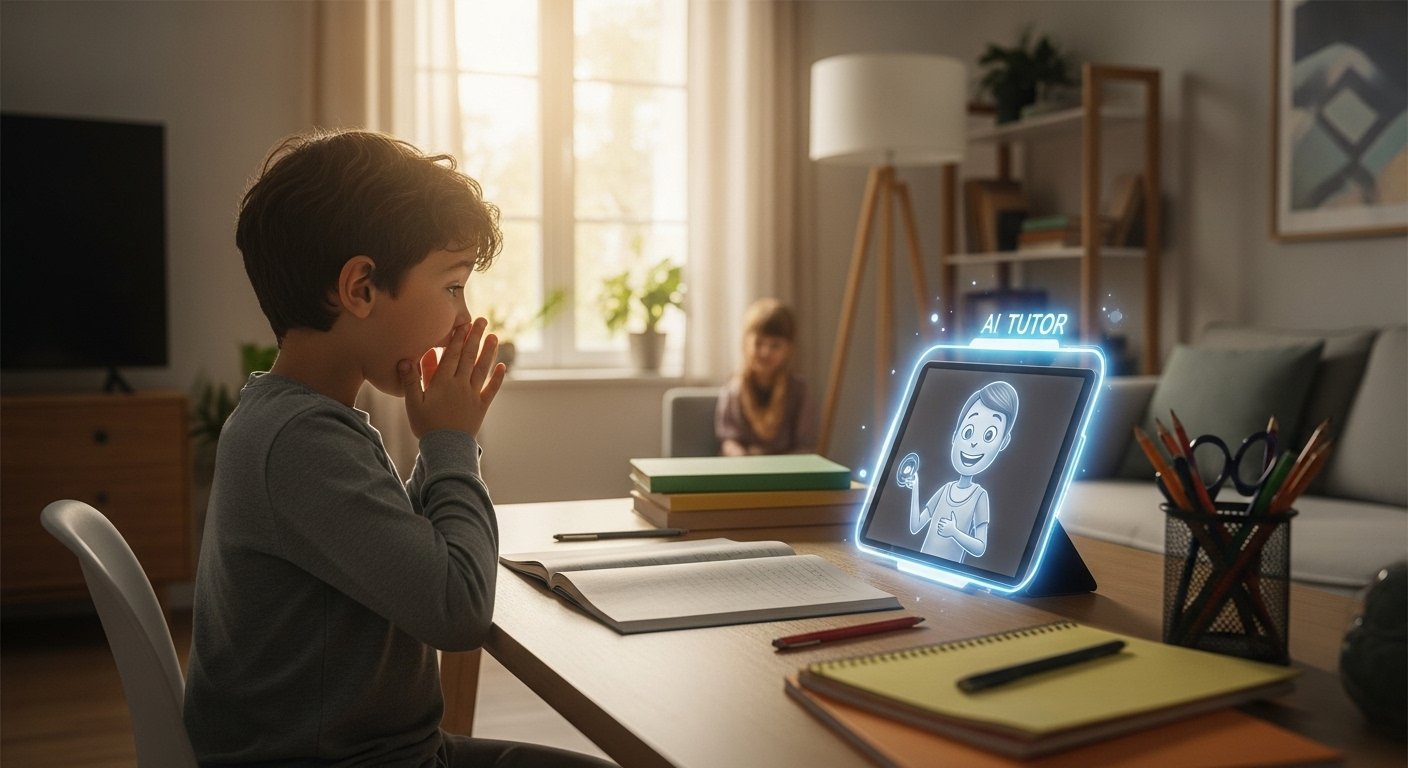
If you’ve noticed more parents talking about AI tutors for kids lately, you’re not imagining it. It feels like every week there’s a new app, robot, or “smart” learning tool promising to make homework smoother and teaching more personalized. Part of the buzz comes from something simple: families are tired. School expectations are rising, teachers are stretched thin, and kids need more support than ever. So when something claims it can help without costing a fortune, people pay attention.
What exactly is an “AI tutor” (vs traditional tutoring)
Instead of thinking of an AI tutor as a replacement for a real human, picture it as a mix of a patient guide and a super-responsive study buddy. A human tutor brings experience and empathy; an AI tutor brings instant feedback and unlimited patience.
Most kids end up using both very differently. A human tutor might walk them through tricky concepts or build confidence. An AI tutor steps in for the moments when your child is stuck at 8 p.m. and you’re out of ideas. And honestly, who hasn’t been there?
The big difference? AI tutors learn your child’s patterns — what they skip, what they rush, where they freeze — and adjust on the fly. It’s tutoring that reacts in real time rather than waiting for the next weekly session.
Have you ever wished someone could explain the same math idea ten different ways without losing patience? That’s where AI shines.
How software and robots are being used (robotic tutors, chatbots, platforms)
AI tutoring isn’t just one thing. Some kids use chat-style apps that feel like texting with a helpful older cousin. Others interact with animated characters or voice-driven assistants that walk them through homework. And yes — a small but growing group of parents are bringing home actual robotic tutors. These little gadgets sit on a desk, talk, gesture, and sometimes even celebrate when your child gets an answer right.
It sounds futuristic, but kids often respond surprisingly well. A shy child might open up to a friendly robot. A distracted kid might pay attention longer when the “teacher” can sense confusion and adjust.
Still, it’s fair to wonder: At what point does this feel too much like handing learning over to a machine?
What’s driving the demand (costs, personalization, learning gaps)
Truth be told, the surge in AI tutors has less to do with hype and more to do with real-life pressure. Personalized learning used to mean expensive one-on-one tutoring. Not every family can swing $40–$80 an hour, especially if a child needs help in multiple subjects.
Add in pandemic learning gaps, growing class sizes, and busy schedules, and parents are looking for support that fits into real life — not the other way around. AI tutors are filling that gap because they’re affordable, available anytime, and tailored to each child’s pace.
If you’ve ever wished you could clone yourself just to survive homework week, you’re definitely not alone.
The Real Benefits: How AI Tutors Help Kids Learn

Every parent knows the look: the slumped shoulders, the frustrated sigh, the “I just don’t get this” whisper over a worksheet. That’s often the moment when AI tutors for kids quietly shine. They don’t judge, they don’t rush, and they don’t take a stressed-out tone when a child asks the same question for the fourth time. They just… help. And honestly, that’s what most families are craving — steady support without pressure.
Personalized pacing and adaptive feedback
Kids learn in waves. Some days everything clicks, and other days even simple things feel impossible. An AI tutor watches those patterns and adjusts on the spot. If your child breezes through a lesson, it speeds up. If they hit a wall, it slows down, changes the explanation, or offers hints instead of answers.
Imagine your child working on fractions. They miss three similar questions in a row. Instead of powering through, the AI circles back, gives a new example, maybe uses visuals, and checks in again. It’s like having a tutor who pays attention to the little things teachers don’t always have time to catch.
And really, who doesn’t want learning that moves at their kid’s pace instead of some preset schedule?
Subject-specific gains (math, reading, writing, science)
Different kids have different “trouble zones,” and AI tutors meet them where they’re struggling.
In math, they break problems down step-by-step, which helps kids who freeze at multi-step questions.
For reading, they offer guided practice without making kids feel embarrassed about sounding words out.
For writing, they nudge kids toward clearer sentences and stronger ideas — not by rewriting things, but by asking questions that spark better thinking.
And in science, they explain big concepts with quick visuals or short simulations that make abstract ideas easier to grasp.
One parent told me their daughter finally understood photosynthesis after an AI tutor turned it into a simple little animation. No pressure. No “you should already know this.” Just support.
Have you ever seen your kid suddenly “get it” after trying a different explanation? That spark is what these tools aim for.
Supporting homework, revision & independent learning
Let’s be honest — homework time can turn into a mini battlefield. Especially when everyone’s tired. AI tutors give kids a place to ask questions without feeling judged, which makes them more willing to try again.
The best part? They also help kids build independence. Instead of waiting for a parent or teacher, kids learn how to check their own work, find mistakes, and solve problems step-by-step. Over time, that confidence sticks. And that’s something no worksheet or textbook can teach on its own.
If your child has ever said, “I wish someone could just explain it right now,” you know exactly why this matters.
The Evidence: What Research Shows (and Doesn’t)

Every parent wants to know the same thing: Does this stuff actually work, or is it just another shiny tech trend? The honest answer is a mix. There’s promising research out there — enough to make educators pay attention — but also plenty of gray areas where we’re still waiting for clearer answers. Like most things in parenting, it’s a blend of hope, caution, and a little curiosity about what our kids’ classrooms might look like in a few years.
Key study results & learning outcomes
When you look at the studies we do have, there’s a pattern that pops up again and again: kids tend to learn a bit faster when an AI tutor is part of the mix. Not because the technology is magical, but because it gives immediate feedback. Kids don’t have to wait a week for a graded worksheet — they get help right when their brain is asking for it.
Some research shows improvements in math fluency, reading comprehension, and even writing organization when AI tools are used consistently. Teachers report fewer frustrated kids and more willingness to try challenging tasks. It’s that nudge of confidence that matters.
But the real question parents ask is, “Will this help my child?” And honestly, the best indicator is how your kid responds to instant support. Some thrive with it. Others still need a human face cheering them on.
What we still don’t know (long-term effects, age groups)
Here’s where things get murkier. AI tutoring hasn’t been around long enough to tell us what happens over several years of use. Will kids become more independent learners? Or will they rely on the tool too heavily? We don’t know yet.
We’re also missing data on younger age groups. Most solid studies focus on upper elementary and older kids. For first and second graders, evidence is still pretty thin. And there’s almost no long-term tracking about how daily use might affect motivation, attention span, or emotional confidence.
It’s fair to ask: Are we getting ahead of ourselves, or are we stepping into a genuinely helpful future? Right now, it’s a bit of both.
Impacts for equity, special-needs, rural/underserved learners
This is where the conversation gets real. Research suggests AI tutors can help level the playing field — especially for kids who don’t have access to expensive private tutoring. Tools that break concepts down step-by-step or offer visual supports can be game-changers for special-needs learners, English language learners, or kids who simply need extra time.
But there’s a flip side. Families in rural areas or low-income communities may not have reliable Wi-Fi, up-to-date devices, or even quiet spaces to learn. And that means some of the kids who could benefit the most might struggle to access these tools at all.
It’s worth thinking about: Are AI tutors bridging the gap… or widening it? The answer depends heavily on access.
Risks & Caveats Every Parent Should Know
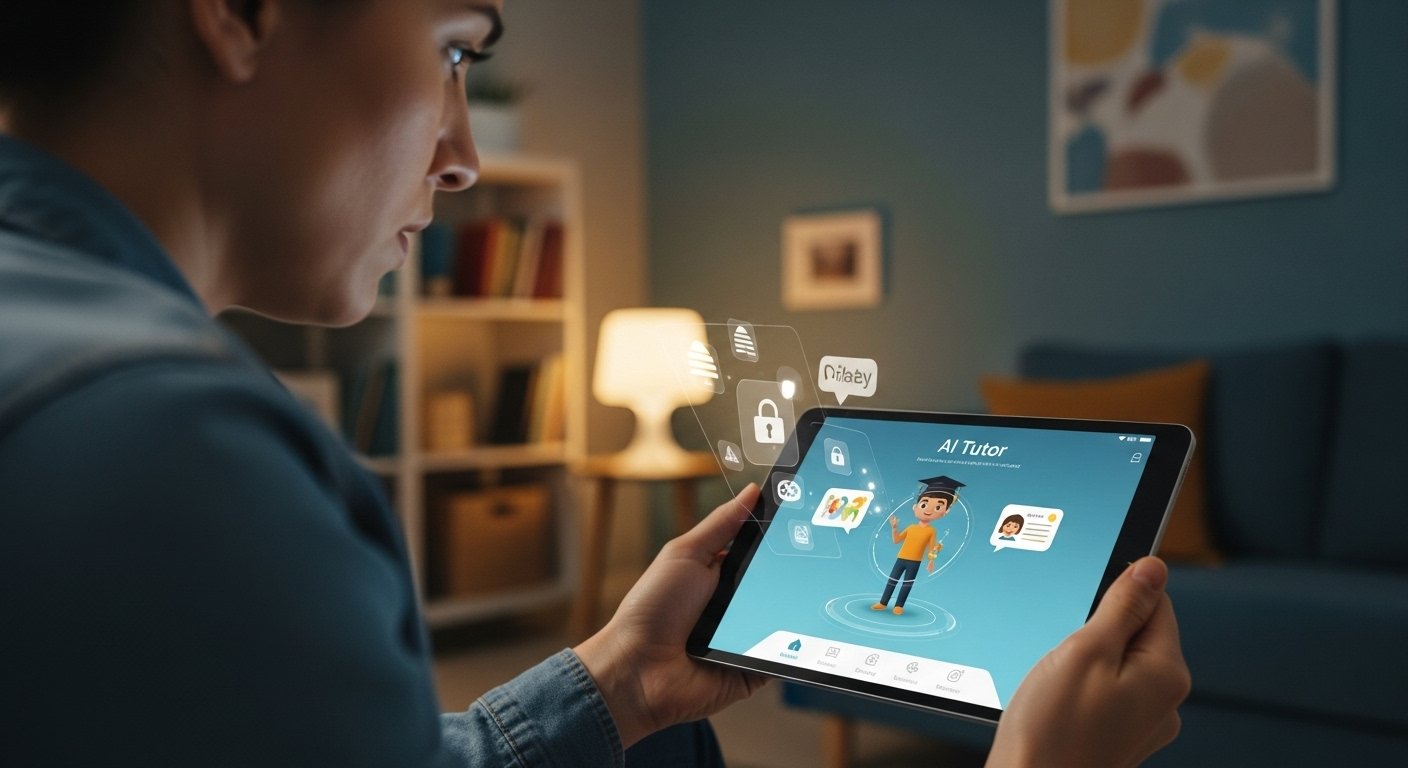
It’s easy to get swept up in the promise of AI tutors for kids, especially when they make homework hour feel less like a battlefield. But just like any new tool in your home, there are a few “hold on a second” moments worth paying attention to. These aren’t dealbreakers — they’re just the things that help you stay in the driver’s seat instead of handing the wheel to a robot.
Privacy, data security & algorithmic bias
If you’ve ever clicked “Accept” on a terms-of-service page and instantly regretted it, you’re not alone. Many AI learning tools collect data — lots of it. Everything from wrong answers to writing samples can end up stored on a server somewhere. That data helps personalize lessons, sure, but it also raises questions: Who gets to see it? How long is it kept? And can it be used for anything besides teaching?
Algorithmic bias is another piece parents rarely hear about. If the system was trained mostly on certain types of students or language patterns, it might misread your child’s learning style or behavior. Imagine a kid who thinks out loud or types slowly — the AI may misjudge their pace or confidence if it wasn’t designed with them in mind.
A little skepticism isn’t paranoia. It’s parenting.
Over-reliance, screen-time & the “passive learning” trap
AI tutors can be great helpers, but kids are smart — sometimes a little too smart. It’s tempting for them to lean on the AI for answers instead of trying first. Before long, the tool becomes a crutch instead of a tutor.
And then there’s screen time. Another app, another device, another glowing rectangle. Even educational screens still count as screens, and some kids slide into passive mode instead of truly thinking. You’ve probably seen it — the glazed eyes, the quick clicks, the “are we done yet?” vibe.
So the question becomes: Is my child learning… or just tapping along?
Social-emotional learning, human tutoring vs AI
AI tutors are patient, predictable, and available 24/7 — but they’re not human. They don’t hear the wobble in a child’s voice when they’re discouraged. They don’t celebrate small wins with the same warmth a teacher does.
Kids learn emotional resilience, communication, and confidence from real people. AI can support academics, but it can’t replace the moments when a child needs encouragement, redirection, or just someone who understands why they feel stuck.
Think of AI tutors as tools, not teammates. They can guide a lesson, but only humans teach heart.
Accessibility & cost barriers
We talk a lot about how AI tools “make tutoring accessible,” but that’s only true if families have the basics — a stable Internet connection, a current device, and a quiet place to learn. Many don’t. Rural and low-income families often face the biggest learning gaps, yet they’re also the ones who struggle most to access these tools.
And while some AI tutors are affordable, others hide their real fees behind subscription tiers or “premium” plans. It adds up quickly.
The tough question here: Are we creating a new kind of learning divide? It’s something worth considering.
How to Choose and Use an AI Tutor at Home

Choosing an AI tutor can feel a little like standing in the cereal aisle — way too many choices, all claiming to be “the best.” And when you’re trying to support your child, that pressure hits even harder. The good news? You don’t have to be a tech expert to make a smart decision. A few honest questions and a little trial-and-error can go a long way.
Questions to ask vendors (curriculum alignment, safety, monitoring)
Before hitting “subscribe,” it helps to dig beneath the shiny marketing. Does the AI tutor follow your school’s curriculum? Can you control what topics your child sees? And what kind of monitoring do you get as a parent — weekly reports, real-time alerts, or nothing at all?
Don’t skip the safety questions, either. Ask how your child’s data is stored, how long it’s kept, and whether it’s ever shared with third parties. If a company hesitates or gives a vague answer, that’s your sign to walk away.
One simple rule? If you wouldn’t trust the company with your own information, why hand over your child’s?
Matching to your child’s age, subject and learning style
Every kid learns differently. Some love visual explanations. Others want to talk things out. And some kids absolutely need a sense of humor built into the lesson or they’re out. AI tutors for kids vary just as much as kids do, so matching one to your child’s style matters.
Younger learners usually benefit from colorful visuals and short activities. Older students may want deeper explanations or step-by-step breakdowns for math and writing. Think about your child’s natural habits. Do they thrive with structure? Do they need flexibility? Do they get bored quickly?
The goal isn’t to pick the “smartest” AI tutor. It’s to pick the one your child actually connects with — because that’s where the progress happens.
Setting up at home: screen-time, parental involvement, progress tracking
An AI tutor is most helpful when it fits into real life, not when it takes over the house. Start with small, predictable sessions — maybe 10–15 minutes for younger kids or 20–30 minutes for older ones. You don’t need to hover, but staying within earshot helps you catch frustration early.
Make sure the tool tracks progress in a way you understand. Some apps overwhelm you with charts. Others show simple “here’s what they struggled with today” notes that actually help you support your child.
And don’t forget to set boundaries. Learning shouldn’t feel like another screen marathon. Kids need breaks, movement, and time to think without a device guiding every step.
Ever notice how even the best tool stops working when a kid is simply tired? That’s your sign to pause rather than push.
When to blend with human tutors / teachers
AI tutors are incredible at repetition, practice, and explaining concepts in new ways. But when your child is anxious, confused, or hitting an emotional wall? That’s where a human shines. A teacher or tutor can read body language, calm nerves, and bring empathy into the learning moment.
Blending AI with human help works surprisingly well. Use the AI for daily support and practice. Lean on teachers or human tutors when a deeper understanding — or emotional encouragement — is needed.
Think of it like this: AI lays the foundation, humans build the confidence.
Age & Stage Guide: From Elementary to High School
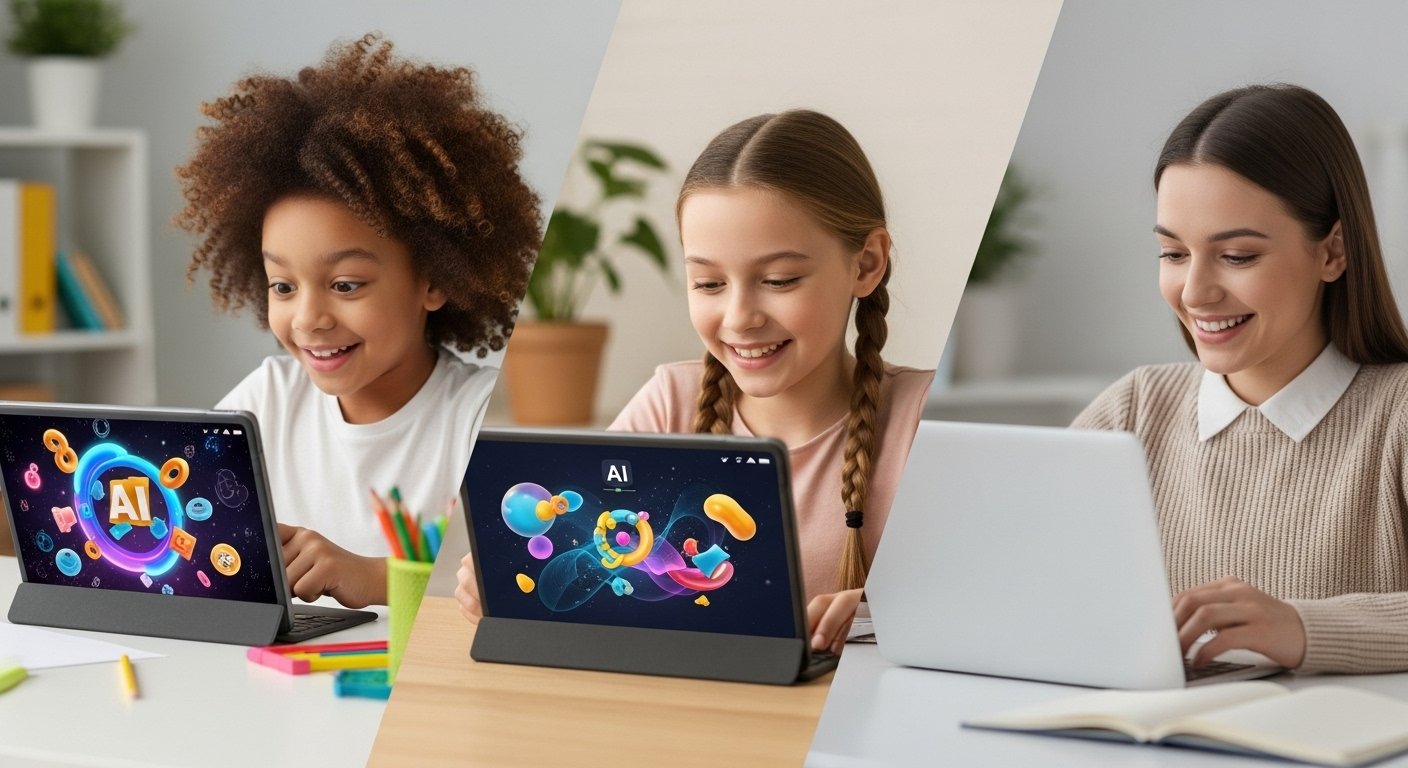
Kids don’t grow in a straight line, and their learning needs don’t either. What works beautifully for a curious seven-year-old might fall flat for a sleep-deprived teenager. The trick is understanding how AI tutors can support each stage without overwhelming them—or you.
Early grades (6–10 yrs): foundation skills, reading & math
If you’ve ever watched a child this age read aloud with one finger trailing under every word, you know how much patience early learning takes. AI tutors shine here because they can repeat the same skill without getting tired. Short phonics games, quick math drills, and colorful visuals help build confidence without turning learning into a tug-of-war.
At this age, sessions should be brief and playful. A five-minute reading prompt or a quick math puzzle is often enough to spark progress. Think of the AI tutor as a gentle warmup—not a full lesson.
And honestly, isn’t that all early learners need? Something steady, encouraging, and simple.
Middle school (11–14 yrs): homework help, writing, self-study
Middle school is that awkward stage where kids want independence…but still ask for help the second a worksheet gets confusing. AI tutors can act like the calm backup coach who steps in when things get messy.
These tools are great for breaking down writing assignments, explaining multi-step math problems, or helping kids prepare for quizzes without panic. They also support self-study skills, which most middle schoolers are still learning.
Picture your child working through homework while checking in with the AI for hints—not answers. It keeps them moving without turning every evening into a meltdown.
But here’s the real question: Are they using the AI as guidance or as a shortcut? A quick peek at their progress logs usually tells you.
High school (15–18 yrs): exam prep, independent work, college readiness
By high school, pressure hits differently. Kids are juggling clubs, jobs, heavier coursework, and the looming “future.” AI tutors help them manage this workload without burning out.
These tools can walk teens through SAT-style questions, help refine essays, or explain tough subjects like chemistry or algebra in plain language. They also build independence—something high schoolers desperately need as they move toward college-level expectations.
The key is balance. You want the AI to support critical thinking, not replace it. If your teen starts breezing through assignments without actually understanding them, that’s your cue for a conversation.
Because let’s be real: high school is where habits stick—for better or worse.
Special-needs / ESL learners: extra considerations
Families of special-needs or ESL learners often describe AI tutors as a breath of fresh air. Tools that offer visuals, repetition, step-by-step cues, or voice support can make learning feel less overwhelming.
But the fit needs to be precise. Some kids may need slower pacing. Others may thrive with audio prompts or text-to-speech. And many benefit from tools that let them practice without feeling rushed or judged.
The most important step? Try different features and watch your child’s response. When the right tool clicks, you’ll see it—you’ll feel it. Their shoulders relax. Their confidence rises. That’s the moment you know you’ve found something that truly supports them.
Cost, Access & Equity: Who Benefits and Who Doesn’t
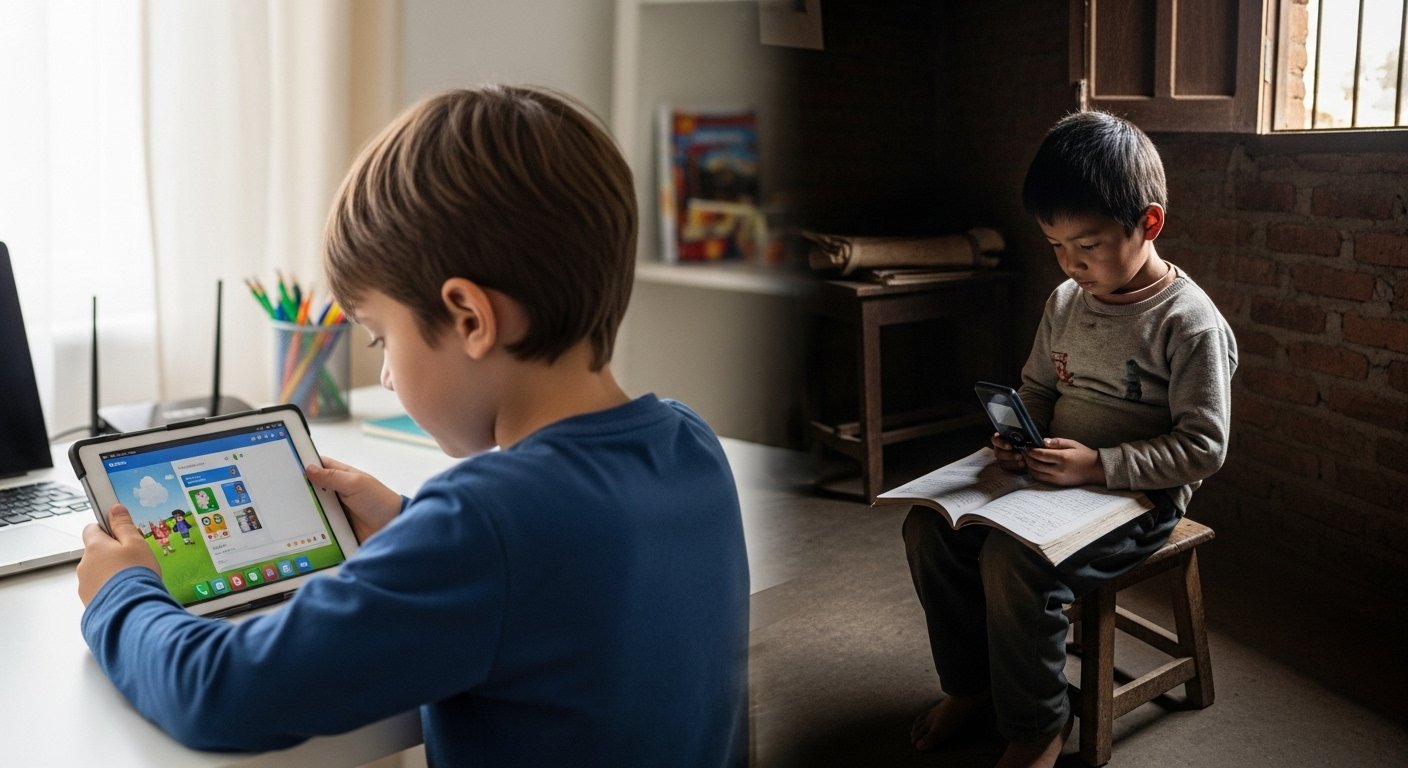
Money isn’t the most comfortable topic for parents, but let’s be honest — learning tools always come with a price, whether it’s a subscription fee or the cost of staying online. AI tutors for kids promise to “make education fair,” but it doesn’t always play out that way in real life. Some families get huge benefits. Others hit roadblocks before they even log in.
Typical pricing models, device/internet requirements
You’ll find AI tutoring tools in just about every price range. Some offer free versions with limited features. Others charge monthly subscriptions — usually somewhere between the cost of a streaming service and a weekly latte habit. Then there are premium platforms that can rival traditional tutoring prices if you’re not paying attention.
But the real cost often hides in the setup. Most tools assume you already have a decent device, steady Wi-Fi, and a quiet space. A slow laptop or spotty connection can turn an “instant-feedback” tutor into a frustrating loop of frozen screens.
And honestly, if the tech doesn’t actually work at home, what’s the point?
Barriers for low-income, rural or underserved families
This is the part no one likes to admit: the kids who could benefit the most from AI tutors are often the least likely to access them. Rural families deal with unreliable internet. Low-income households might have one shared device for multiple kids. And some parents work hours that make it hard to supervise or troubleshoot technology.
For these families, AI tutoring can feel like watching a train go by — helpful, powerful, full of potential… but out of reach.
And it raises an important question: Are we closing the learning gap, or building a digital wall around it?
School-vs-home deployment: how districts are using AI tutors
Some school districts are stepping in and providing AI tools at school or on school-issued devices. When that happens, access improves dramatically. Kids get consistent support during the day, and parents don’t have to manage subscriptions or setup.
But it varies wildly from district to district. Wealthier schools roll out AI tutoring as part of a full learning plan. Underfunded districts might only use it in small pilot programs — or not at all. That means two students, living just a few miles apart, can have completely different experiences with the same technology.
AI in schools can be a powerful equalizer… or a reminder of which communities have more to work with.
The Future of AI Tutoring: What Parents Should Prepare For
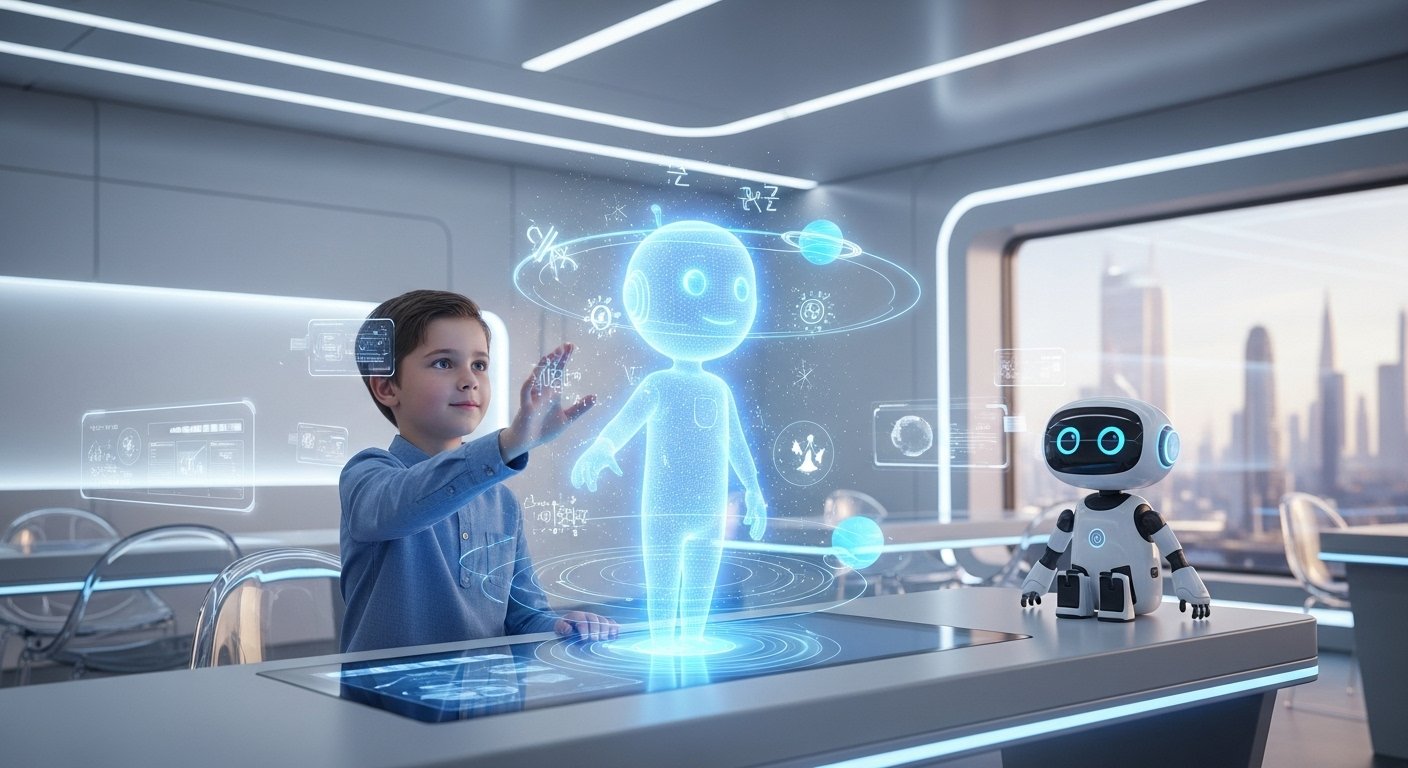
If you feel like you blinked and suddenly AI tutors for kids are everywhere, you’re not alone. What’s coming next might feel even more surreal — but also full of new possibilities. The future isn’t just “more apps.” It’s a whole shift in how kids learn, explore, and even think about school.
Emerging trends (robotic tutors, multimodal AI, VR/AR)
We’re heading toward a world where learning doesn’t always happen on a flat screen. Some companies are already building small robotic tutors that sit on a desk, respond to a child’s facial expressions, and gesture while teaching. It sounds wild, but kids often respond faster to something that feels alive and attentive.
Multimodal AI — tools that understand voice, text, drawings, and even emotions — will make interactions feel smoother and more natural. And VR/AR tutoring? That might take learning beyond worksheets entirely. Imagine a child “walking through” the solar system instead of memorizing planets from a chart.
Of course, it raises the question: How far are we willing to go before learning feels more virtual than real? That’s something every parent will have to decide.
Life skills and AI literacy: what kids need beyond subject help
As AI tutors become more common, the skills that matter most won’t just be math and reading. Kids will need to learn how to question information, spot mistakes, and understand when a tool is helping versus when it’s leading them in the wrong direction.
AI literacy — knowing how these systems think, what they can and can’t do, and how to double-check them — will be as important as digital literacy used to be a decade ago. Kids who grow up learning with AI will need the confidence to use it wisely, not blindly trust every answer.
And honestly, isn’t that the skill we want them to carry into adulthood anyway?
How AI tutors may redefine the role of teachers
Despite the scary headlines, AI isn’t here to replace teachers. If anything, it will make their jobs more human. As AI tutors handle repetitive drills and basic explanations, teachers can focus on creativity, deeper discussions, emotional support, and the kind of connection no device can replicate.
Classrooms might shift toward more coaching, more collaboration, more project-based learning — with AI tools filling in the gaps quietly behind the scenes. The teacher transforms from “the only source of knowledge” to the mentor who helps students make sense of everything they’re learning.
The real shift won’t be less teaching. It’ll be better teaching.
Parent Checklist & Action Plan
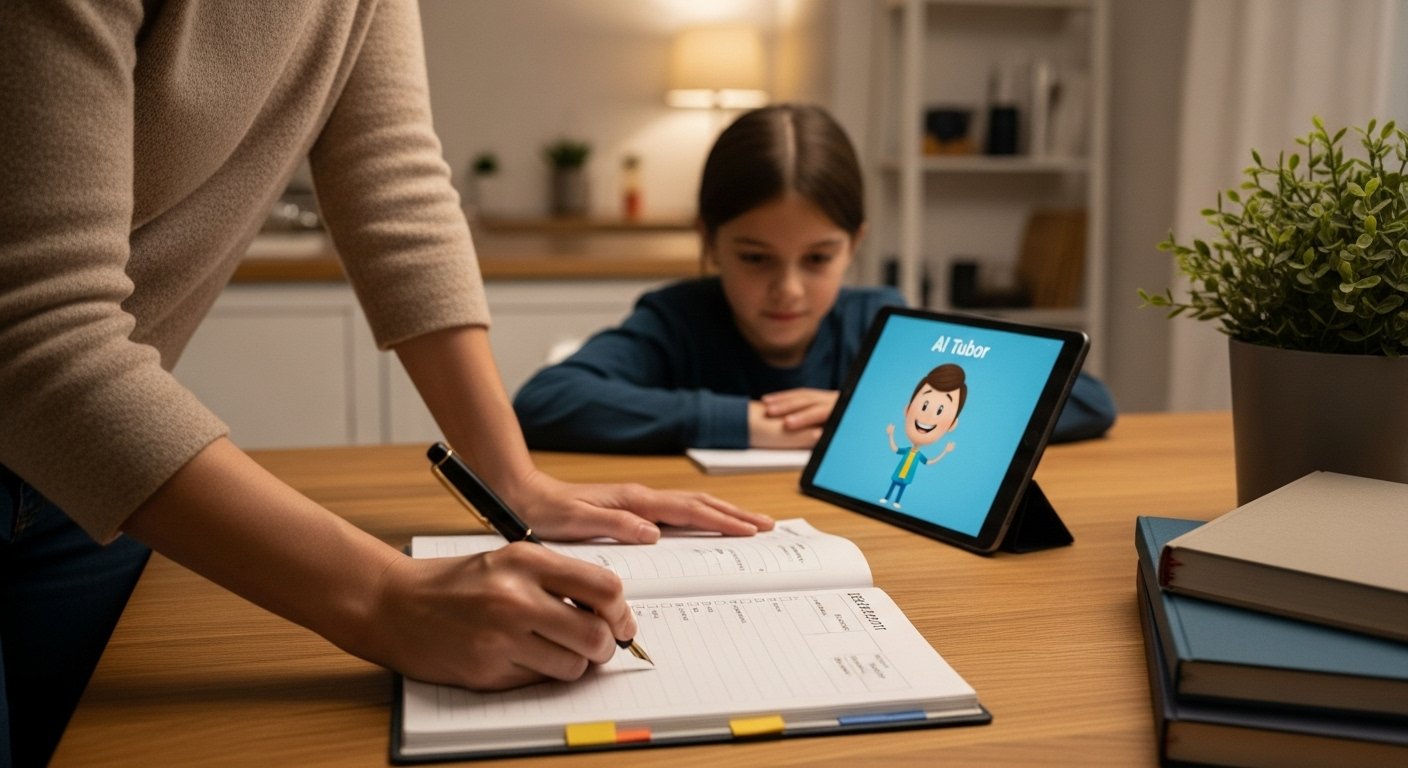
Most parents don’t want a complicated plan — just something clear, doable, and realistic. When you’re juggling work, dinner, laundry, and a child asking you what a “reciprocal fraction” is, you don’t have time for a ten-step strategy. This section is all about keeping things simple, calm, and effective.
Quick-reference checklist (Do’s & Don’ts)
Before diving in, it helps to set a few guardrails. Nothing fancy — just small reminders to keep learning healthy.
Do:
-
Start with short sessions and see how your child reacts.
-
Check the tool’s privacy settings and parental controls.
-
Look at progress summaries once or twice a week.
-
Keep learning positive; celebrate small wins.
Don’t:
-
Treat the AI tutor as a babysitter.
-
Assume it will magically fix everything.
-
Ignore signs of frustration or zoning out.
-
Let screen time creep into every corner of the day.
It’s basically the same rules most parents already follow — just applied to a new kind of “helper.”
Conversation starters with your child & educator
Kids don’t always tell us how they feel about something unless we ask the right questions. A few simple prompts can go a long way:
With your child:
-
“What did the AI help you understand today?”
-
“Was anything confusing or annoying?”
-
“What would you want the AI tutor to do differently?”
-
“Did it feel too fast, too slow, or just right?”
With teachers or tutors:
-
“What topics should we focus on at home?”
-
“Are you noticing any changes in class since we started using the AI tool?”
-
“How can we make sure the AI fits with your lessons?”
These questions open the door without turning it into an interrogation. And really, isn’t that the goal — to keep the conversation light but honest?
Monitoring usage and measuring ‘Is it working?’
The easiest way to track whether an AI tutor is helping is to watch your child, not the charts. Are they less frustrated? Do they try longer before giving up? Are they more confident with things that used to stump them?
Then check the data. Most AI tutors for kids offer quick dashboards showing strengths, struggles, and trends. You don’t need to analyze everything — just glance once a week. Look for slow, steady improvement, not overnight miracles.
If progress stalls or your child starts resisting sessions, that’s your cue to pause and reassess. Maybe the tool needs an adjustment. Maybe your child needs a break. Or maybe a teacher or human tutor needs to step in.
Because the real measure isn’t the app’s score… it’s the child in front of you.
Conclusion
There’s something strangely comforting about realizing we’re all figuring this out at the same time. A few years ago, the idea of AI tutors for kids felt like pure science fiction, and now here we are, watching our children learn with tools we never imagined growing up. It’s normal to feel torn — hopeful one minute, cautious the next. That mix just means you care.
If there’s one thing this journey shows, it’s that technology doesn’t replace the heart of learning; it simply gives us new ways to support it. Your presence, your questions, your curiosity alongside your child — that’s what makes these tools truly work.
So take a breath, stay curious, and experiment at your own pace. The future of learning isn’t something to fear. It’s something we get to shape, one thoughtful choice at a time.
FAQs
Q: How does an AI tutor for kids actually work at home?
A: Think of an AI tutor as a smart study buddy that watches how your child learns and then adjusts lessons accordingly. It might pause when your child struggles, repeat or simplify a concept, and move ahead when they’re ready — giving support just when it’s needed.
Q: Can these AI learning tools replace a human tutor or teacher?
A: Not really. While AI tutors for kids are great at drills, feedback, and pacing, they don’t catch emotional cues or build relationships the way a teacher or tutor can. They’re best used as a supplement, not a replacement.
Q: Are AI tutors safe for my child’s privacy and data?
A: That’s a smart question. Many tools collect learning patterns and usage data to personalize lessons. Before you choose one, look into how your child’s data is stored, whether it’s shared, and what parental controls exist.
Q: My child has ADHD / is learning English as a second language — can AI tutors help?
A: Yes — with some caution. AI tutors can be very helpful for repetition, pacing, and visual or audio supports. But you’ll want to make sure the tool offers flexible settings, visuals or read-aloud options, and doesn’t assume every learner works the same way.
Q: What signs tell me the AI tutor for kids is actually helping?
A: Look for changes like fewer frustrated homework sessions, more confidence in tackling new problems, or your child saying “Hey, I got this now” instead of avoiding tasks. If it’s just more screen time and stress, it might be time to reassess.
Q: Is the cost of an AI tutor worth it compared to regular tutoring?
A: It depends. If your child is using it regularly, making steady progress, and it fits within your budget and tech setup, it can be a great value. But if usage is low or the tool doesn’t match your child’s needs or access situation, traditional tutoring or hybrid models might be better.
Q: Will my child become dependent on the AI and stop thinking for themselves?
A: That’s one of the real risks. If a tool answers everything without prompting the child to think, the “thinking muscle” can weaken. It’s helpful to pair AI use with questions like “How did you solve this?” or “What made you pick this answer?” so your child stays actively learning.