
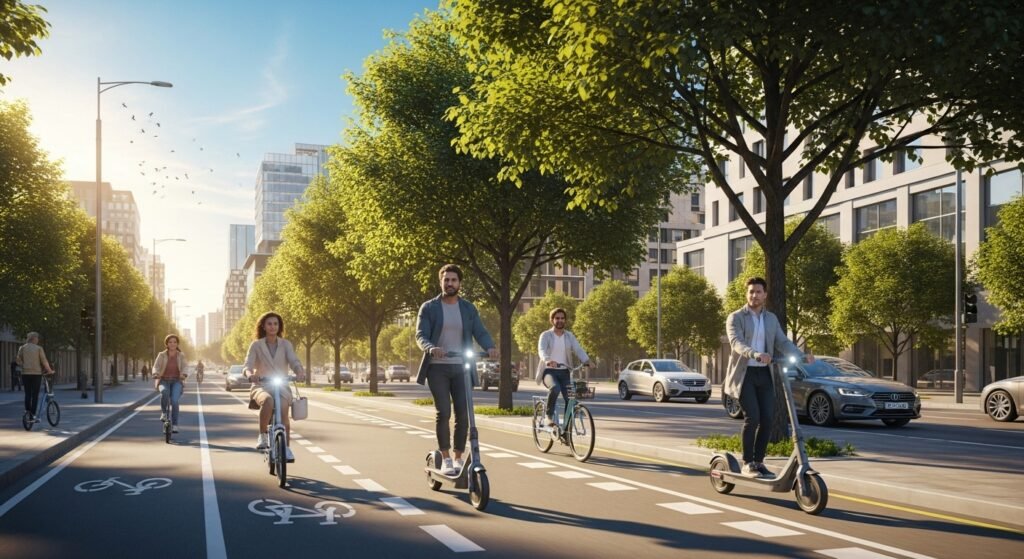
I remember standing on a busy street corner in D.C. last summer, watching a line of e-scooters zip past cars stuck in traffic. And I couldn’t help thinking, “Huh… maybe this is what the future actually looks like.” In 2026, that scene feels even more familiar as micro-mobility — especially e-scooters and e-bikes — quietly reshapes the urban carbon footprint of U.S. cities. Honestly, it’s surprising how something so small can change the way entire neighborhoods move.
People aren’t just ditching short car trips; they’re discovering faster, cleaner ways to get around without feeling like they’re making some huge lifestyle sacrifice. And you know what? That tiny shift in everyday choices might be one of the most underrated climate wins happening right now.
Why Micro-Mobility Matters for Urban Carbon Emissions
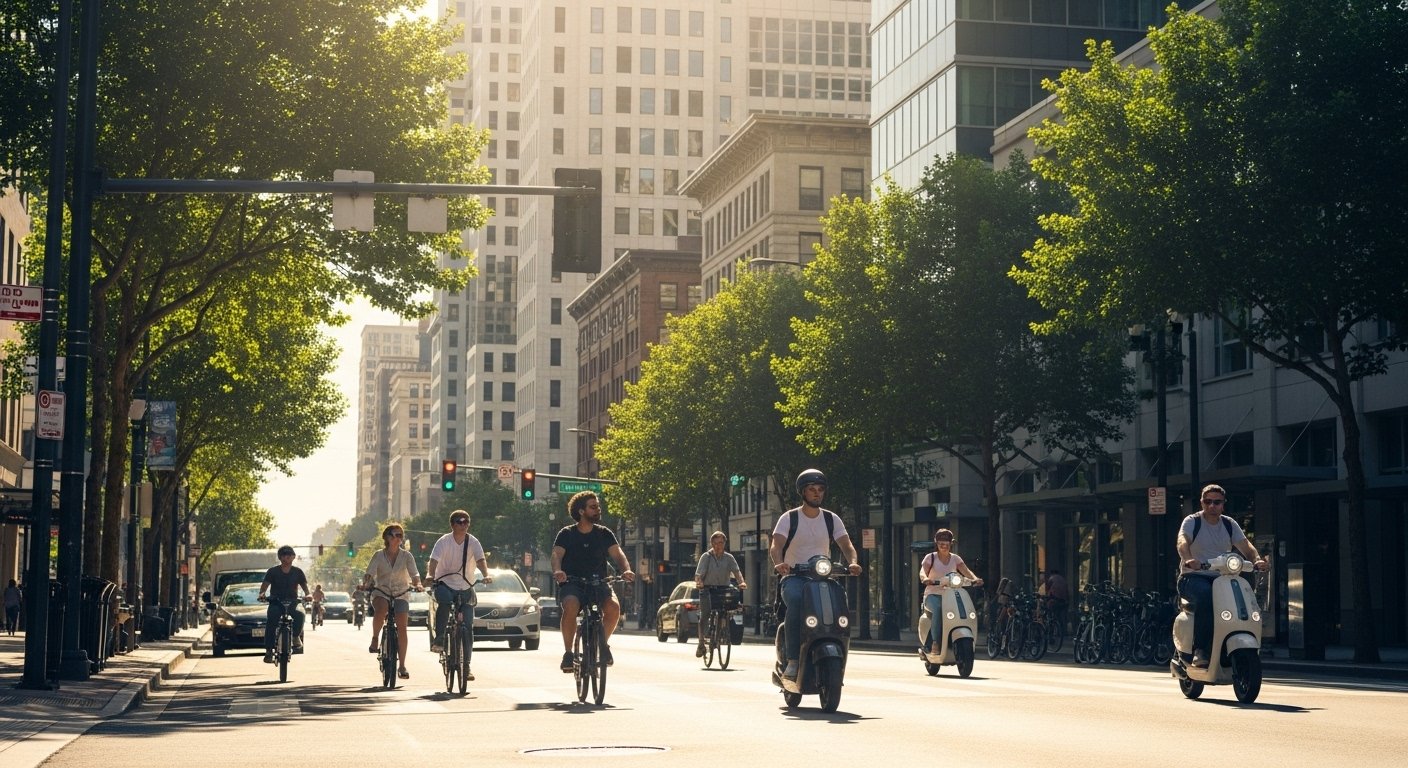
Sometimes the conversation about climate change feels huge — almost too big to touch. But then you look at cities like Austin, Denver, or D.C., and you notice something small but powerful happening: more people quietly switching to e-bikes and e-scooters for the trips they used to make by car. And suddenly, micro-mobility doesn’t feel like a trendy add-on. It feels like a genuine shift in how Americans move, breathe, and live in their cities.
The U.S. urban carbon challenge
Let’s face it — most U.S. cities weren’t designed for quick, clean movement. A big chunk of urban carbon emissions still comes from those “little” car trips: the school drop-offs, the coffee runs, the quick drive to the gym. They add up faster than we like to admit. And when streets clog up, emissions spike even higher.
Now imagine replacing just a slice of those with a five-minute scooter ride or a breezy e-bike trip. Sounds small, right? But small changes spread across millions of people can shift an entire city’s carbon footprint. The real question is: if we already know this, what’s stopping us from using micro-mobility more often?
What counts as micro-mobility
Most folks hear “micro-mobility” and picture a row of scooters tossed on the sidewalk. But the space is bigger than that. It includes shared e-bikes, privately owned e-bikes, docked scooter systems, and even compact seated scooters you now see in neighborhoods and college towns.
What they all share is simple: they’re lightweight, electric, and built for trips that don’t need a full-size car. Truth be told, once people try them, they realize how much faster and less stressful short trips can be. And who doesn’t want to get somewhere without burning gas or sitting in traffic?
The first-mile/last-mile problem
If you’ve ever tried catching a bus or train that’s a 15-minute walk away, you know exactly why this problem matters. That “in-between distance” — not far enough for a car, not close enough to walk — stops people from using public transit as much as they want to.
Micro-mobility fits right into that awkward gap. It gives people an easy way to connect their home, a transit stop, and wherever they’re headed. Suddenly, transit becomes more appealing, and car dependence loosens its grip. Isn’t it wild how a simple scooter ride can unlock an entire transportation system?
The Current State of Micro-Mobility in the U.S. (2025–26 Snapshot)
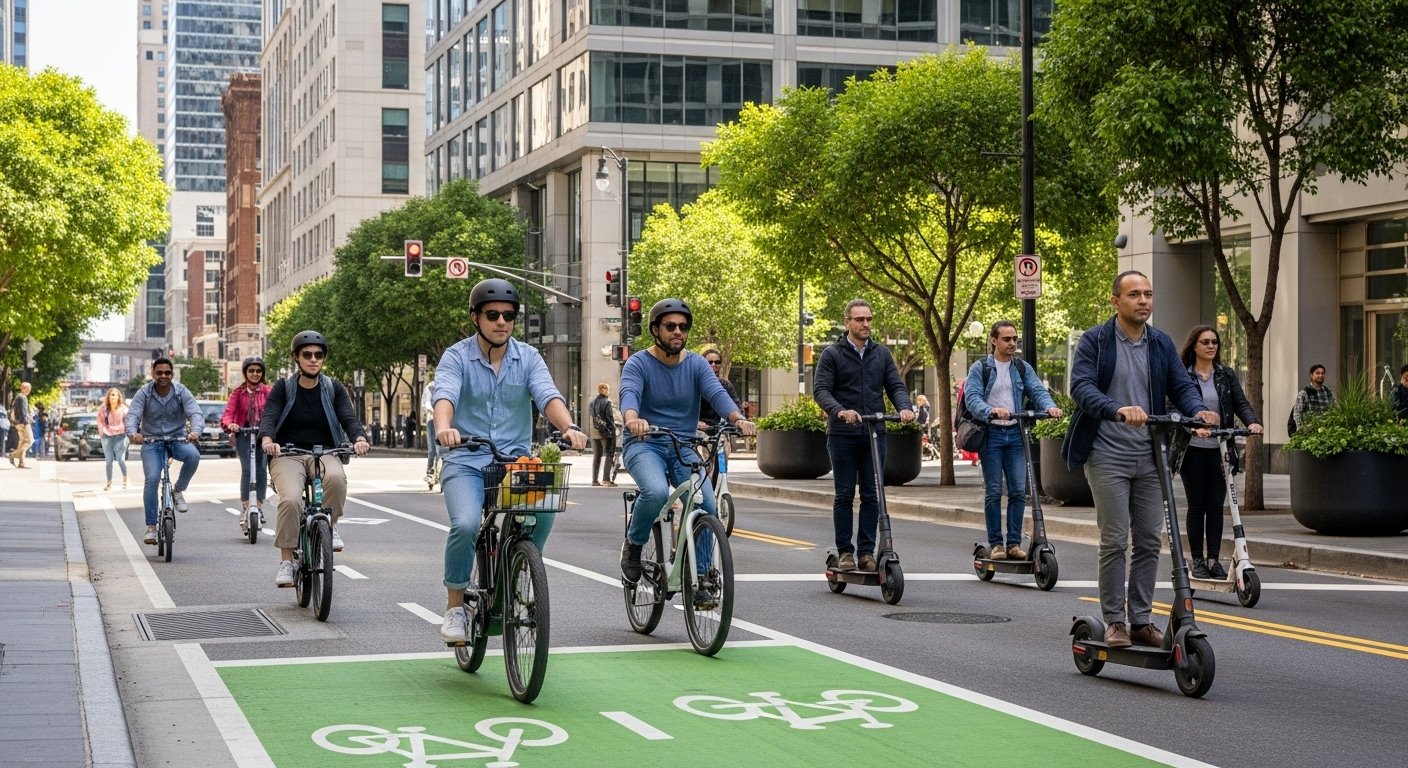
If you’ve walked through almost any major American city lately, you’ve probably noticed the same thing: more people cruising past on e-bikes, scooters lined up at intersections, and fewer cars crowding short-distance routes. It’s subtle, but it feels like the ground is shifting. Micro-mobility isn’t a “future” idea anymore — it’s already shaping the 2026 urban carbon footprint in ways most of us didn’t see coming.
Adoption trends & market size
There’s a funny moment almost every rider has the first time they hop on an e-bike — that little jolt of “wow, this is easier than I expected.” And truth be told, that feeling is fueling the surge. Americans are embracing micro-mobility faster than many cities can keep up with. Sales of personal e-bikes keep climbing, and shared e-scooter trips now hit record numbers during warm months.
People aren’t just riding for fun, either. They’re using these small electric vehicles for errands, commuting, and every “I don’t want to drive for this” moment. And honestly, who can blame them when traffic feels worse every year? The real question is: if adoption continues to rise at this pace, how will cities adapt in time?
Leading U.S. city examples
Some cities jumped in early, and you can feel the difference the moment you step onto the street. Denver has embraced e-bikes so strongly that its rebate program sells out within hours. Washington, D.C., treats scooters like part of the transit network. And in places like Oakland and Minneapolis, protected bike lanes make micro-mobility feel safer and more inviting than ever.
Each city shapes micro-mobility in its own way — incentives, rules, parking zones, even rider education. But one thing ties them together: once people see these options working in real life, they become harder to ignore. It almost makes you wonder why more cities haven’t followed their lead.
Shared vs private micro-mobility
If you’ve ever opened an app to grab a scooter but ended up taking your friend’s personal e-bike instead, you already understand the difference. Shared scooters are perfect for “spur-of-the-moment” trips — the quick hop to lunch or the ride to a nearby train station. Private e-bikes, though, are becoming the go-to choice for people who want reliability without having to check an app every time.
Both play a role in reducing carbon-intensive short car trips, but they change behavior in different ways. Shared fleets spark curiosity; private ownership creates habits. And if habits are what drive long-term sustainability… well, that says a lot about where micro-mobility is heading next.
How Micro-Mobility Impacts Carbon Footprints: Mechanisms & Metrics
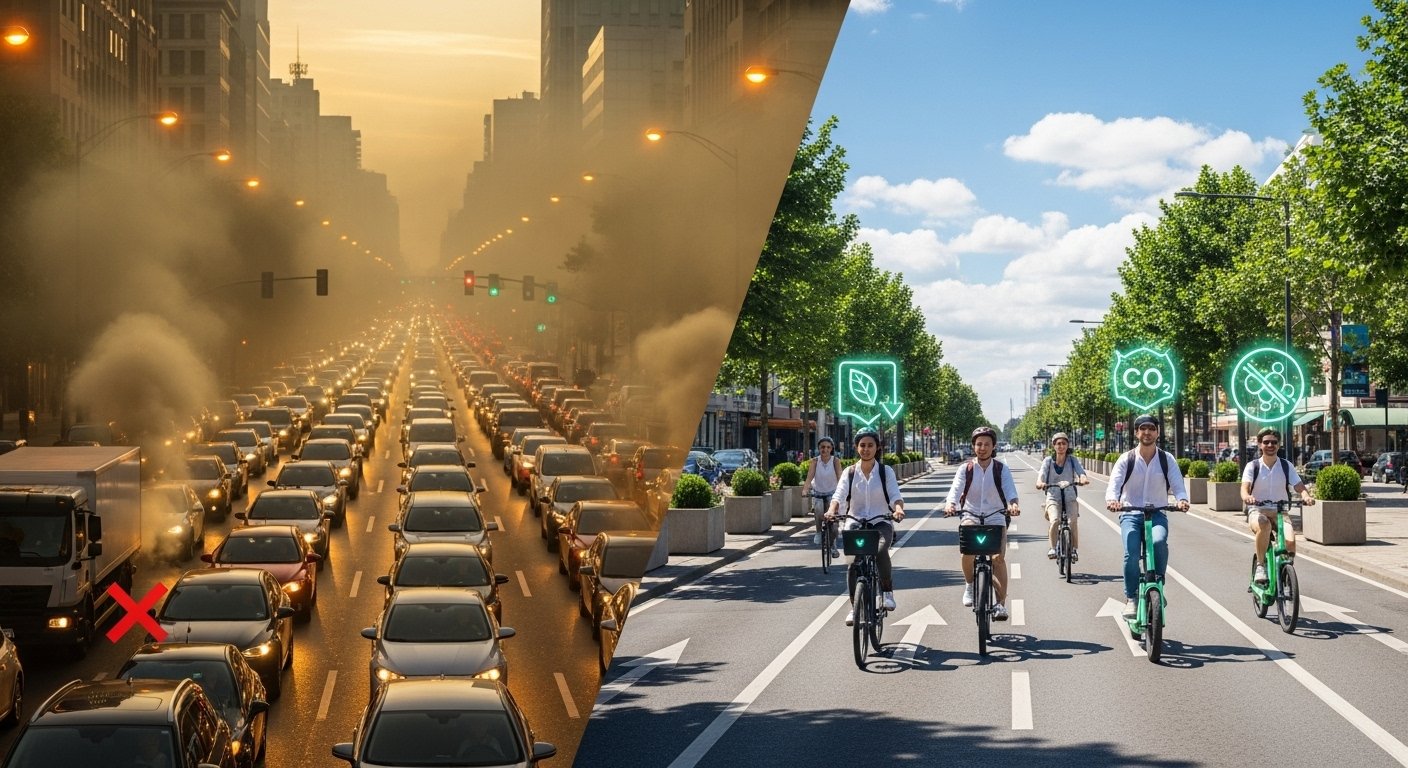
If you’ve ever ditched your car for a quick scooter ride, you probably felt that tiny rush of freedom — the “I just saved myself 20 minutes of traffic” moment. What many people don’t realize is that these tiny swaps aren’t just convenient. They’re reshaping the urban carbon footprint in 2026 far more than any big, dramatic policy announcement.
How micro-mobility replaces other modes
Picture the last short trip you took — maybe to grab coffee or run a small errand. Most Americans automatically reach for their car keys. But when someone picks an e-bike or e-scooter instead, that’s one less cold-engine start, one less mile of stop-and-go emissions, and one less car adding to city congestion.
And honestly, these swaps add up faster than we expect. In dense neighborhoods, riders often notice that a scooter gets them across town quicker than a car—no circling for parking, no inching through traffic lights. Doesn’t it make you wonder how many car trips could disappear if micro-mobility became our first instinct, not our last?
Life-cycle emissions overview
Now, here’s the part most folks don’t think about: even small electric vehicles come with a carbon footprint. Batteries need resources. Manufacturing takes energy. And shared fleets require charging and maintenance trips. But compared to cars — especially gas-powered ones — the numbers look wildly different.
An e-bike or e-scooter uses a fraction of the energy a car does over its entire life. And when cities use efficient systems like battery-swapping instead of nightly truck pickups, emissions drop even further. The simpler way to look at it? If a personal car is a giant carbon footprint, a scooter is more like a small smudge.
When micro-mobility saves carbon
Micro-mobility shines when it replaces short car trips — the kind that create the highest per-mile emissions because engines are cold and traffic is slow. Even replacing two or three short drives a week can make a dent in someone’s personal footprint.
But it’s not just about individual choices. When enough people switch, cities feel the difference: less gridlock, cleaner air, and transit systems that suddenly work better because streets aren’t jammed. The magic happens when micro-mobility becomes a habit, not a novelty. And isn’t that the real goal — small changes that quietly reshape how entire cities breathe?
Key Enablers & Barriers for Carbon Benefit in Urban Environments
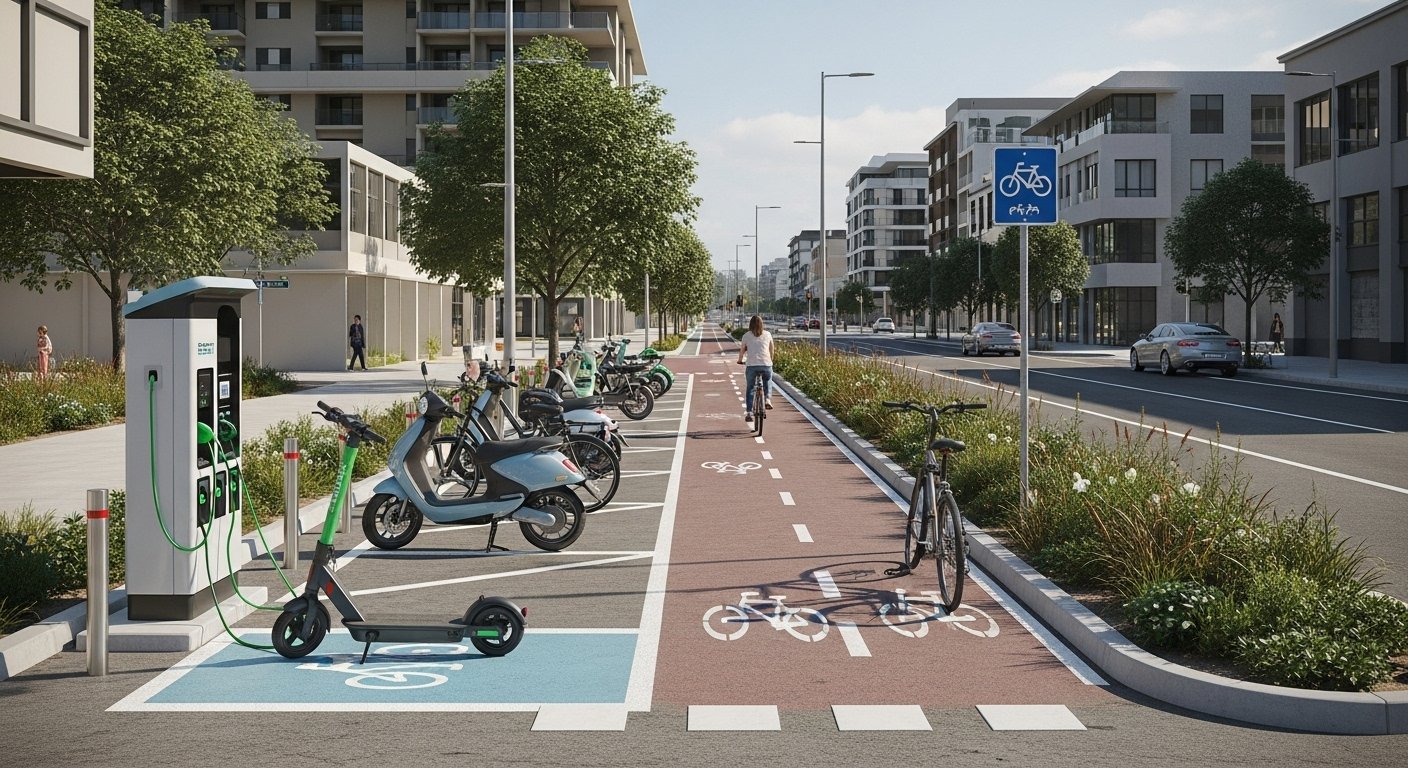
If you’ve ever tried riding an e-bike on a street with no bike lane, you know exactly how fast excitement can turn into stress. Micro-mobility can reshape the urban carbon footprint in 2026, but only if cities set the stage properly. It’s a mix of design, rules, technology, and human habits — all working together or, sometimes, working against each other.
Infrastructure needs
Nothing changes a rider’s confidence like a well-marked bike lane. It’s almost wild how a single strip of paint or a protected path can turn a nerve-wracking ride into a smooth, enjoyable one. But many U.S. cities still treat micro-mobility lanes as “nice-to-have” projects rather than essential transportation infrastructure.
Riders need safe lanes, clear parking zones, and charging hubs that don’t feel hidden behind a gas station. When that infrastructure is missing, even the most climate-conscious rider hesitates. And who can blame them? Would you choose a scooter if the route feels unsafe from start to finish?
Policy & regulation factors
Rules shape how micro-mobility feels on the ground. Some cities welcome e-bikes and scooters with simple, friendly guidelines. Others pile on so many restrictions that riders feel like they’re breaking a rule every time they turn a corner. And then there are places where policies shift every few months, leaving both operators and riders confused.
Strong policies can boost adoption, reduce clutter, and encourage carbon-saving trips. Weak ones can stall progress for years. The question cities need to ask is: are we regulating convenience, or are we regulating toward a cleaner future?
Tech & operations improvements
Behind every smooth scooter ride is a whole system working quietly in the background. Battery swapping, smart parking, geofencing, fleet tracking — none of it is flashy, but all of it matters. Better tech means longer vehicle lifespans, fewer maintenance trips, and lower operational emissions.
Imagine a city where scooters charge themselves through solar hubs, or where e-bikes alert maintenance teams before something breaks. We’re inching closer to that future. And honestly, that’s when micro-mobility becomes not just a greener option, but a smarter one.
Behavioral challenges
The biggest barrier isn’t technology — it’s human behavior. Some people love the idea of micro-mobility until weather, habit, or convenience gets in the way. Others still see biking or scootering as something “other people do,” not as part of their daily life.
Even small cultural shifts help: seeing coworkers ride to lunch, neighborhoods adding scooter parking near shops, or families using e-bikes for weekend errands. Behavior spreads through tiny moments of inspiration. And isn’t that how most change happens — one person trying something new because they saw someone else enjoying it?
The Equity, Land-Use & Urban-Design Factor
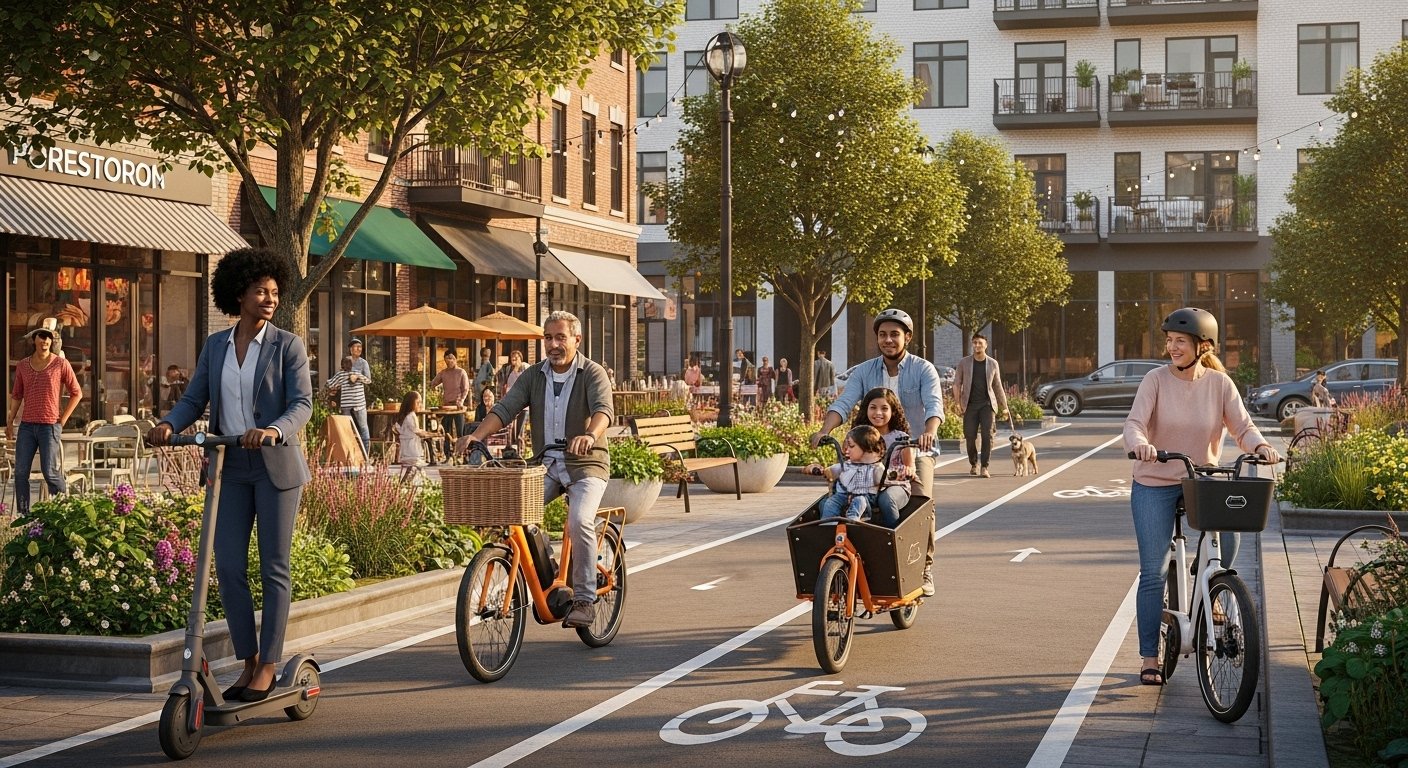
Every city has that one neighborhood where you instantly feel the difference — safer streets, cleaner air, people actually enjoying being outside. And it makes you wonder why every community doesn’t get to experience that same ease. Micro-mobility, in a surprisingly simple way, brings those opportunities closer to people who’ve been left out of the traditional transportation system.
Access & mobility equity
For a lot of Americans, not having a car isn’t a lifestyle choice — it’s a financial reality. And relying on buses that come every 40 minutes can make even short errands exhausting. E-bikes and shared scooters give people another way to move without being punished by their ZIP code.
When someone can get to work, a doctor’s appointment, or a grocery store without begging for a ride, that’s real mobility equity. It’s not about luxury — it’s about dignity. And honestly, isn’t that what transportation should offer in the first place?
Street space & land-use change
Walk through any dense city and you’ll notice something funny: cars take up most of the space, even when they’re just sitting there. But when cities build bike lanes or turn a few parking spots into micro-mobility hubs, the street suddenly feels alive. People move differently. Small businesses see more foot traffic. Parks and plazas start popping up where asphalt used to be.
It’s amazing how much character a street can rediscover when it’s designed for people rather than for parked vehicles. And doesn’t it make you wonder how much urban beauty has been hiding under all those cars?
Role in 15-minute cities
The whole idea of a “15-minute city” sounds dreamy until you realize it’s actually pretty simple: every daily need within a short walk, bike ride, or scooter trip. Micro-mobility fits right into that vision. It fills the gaps between home, work, school, and everything in between without relying on a car for every small thing.
Think about it — when you live in a place where grabbing dinner or picking up a package doesn’t require fighting traffic, life just feels easier. That’s the kind of design that cuts carbon emissions without people even noticing they’re making greener choices.
Business & Municipal ROI: Counting the Carbon Dividends

Anytime a city talks about “return on investment,” most people picture spreadsheets, not scooters. But the funny thing is, micro-mobility has become one of those rare solutions that saves money and cuts carbon at the same time. You can feel it in places where traffic moves more easily, air feels cleaner, and residents suddenly have more ways to get around for less.
Cost vs carbon savings
Ask any city planner what drains their budget, and you’ll hear the same answers: traffic congestion, road repairs, and endless parking demands. Micro-mobility chips away at all of that. When even a small percentage of people choose e-bikes or e-scooters instead of driving, the city spends less on maintaining worn-out roads and massive parking lots.
But the real payoff is in carbon savings. Short car trips are some of the dirtiest, most inefficient miles on the road. Replace those with electric trips, and cities see measurable drops in emissions. And honestly, isn’t it refreshing when a solution is both cheaper and greener?
U.S. city case study
Take Denver, for example. When the city rolled out its e-bike rebate program, many thought it would be a niche perk. Instead, bikes sold out. Residents used them for commutes, grocery runs, school drop-offs — you name it. The city saved millions in potential congestion-related costs and saw noticeable reductions in vehicle miles traveled.
It’s a simple story with a big lesson: when cities make micro-mobility affordable and accessible, the community responds. It makes you wonder how many other cities could see the same results if they just took the leap.
How operators track emissions
Behind every shared scooter or e-bike is a company quietly crunching numbers — battery health, charging cycles, fleet efficiency, even how many car trips were avoided. Operators use this data to show cities the carbon savings in real-time, not just in annual reports.
Some track how often their vehicles replace car rides. Others log operational emissions, like charging or maintenance routes, so cities can see the full picture. It’s not perfect yet, but it’s getting sharper every year. And with better tracking comes better decisions — the kind that help micro-mobility cut deeper into urban carbon footprints.
What’s New for 2026 and Beyond: Trends to Watch
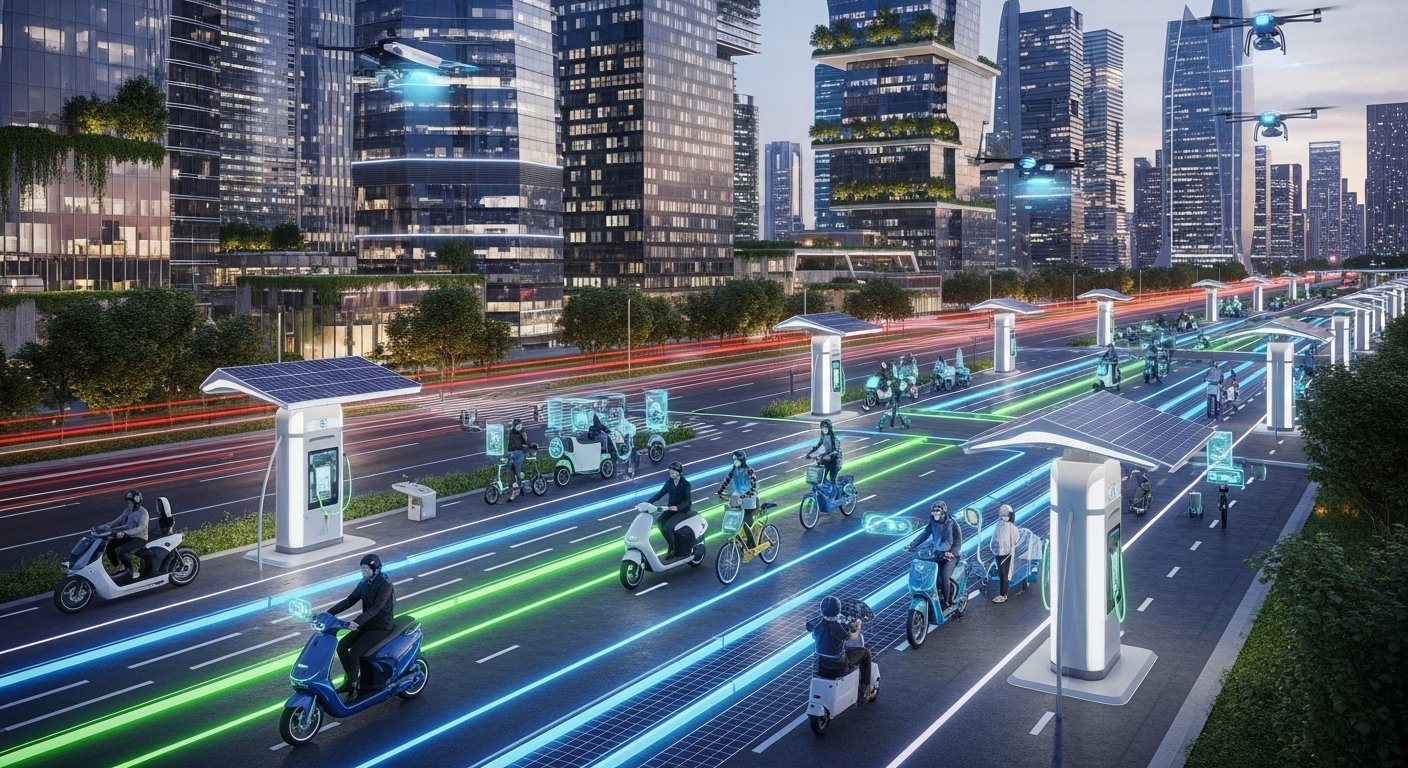
If 2025 felt like the warm-up year for micro-mobility, 2026 is the moment things get interesting. You can almost feel the shift happening — quieter streets, more charging hubs, and commuters who look genuinely happier on an e-bike than behind a steering wheel. The next wave of change isn’t just about smaller vehicles. It’s about smarter cities built around them.
Next-gen micro-mobility tech
It’s funny how fast the tech evolves. A couple of years ago, e-scooters felt like toys. Now we’re seeing longer battery ranges, self-correcting stability systems, and even scooters that can reposition themselves when riders leave them in awkward spots. E-bikes are getting lighter too, with batteries that barely add weight and motors that feel surprisingly natural.
And then there’s the whisper of autonomous micro-mobility support vehicles — small bots that deliver batteries, move scooters to high-demand areas, or assist with charging. Sounds futuristic, right? But this is the kind of tech that quietly helps cities cut carbon without riders having to think about it.
Future policy landscape
Policies are changing fast, and honestly, it’s refreshing to see cities finally treating micro-mobility like real transportation. Some states are offering purchase incentives for e-bikes. Others are rewriting zoning rules so new developments must include micro-mobility parking and charging.
There’s also a growing push to integrate e-scooters and e-bikes into climate action plans—not as side projects but as core tools for reducing urban carbon footprints. The big question is: will more cities be brave enough to cut back on car parking and invest those funds into cleaner, lighter mobility?
Scaling micro-mobility systems
Scaling isn’t about dumping more scooters on sidewalks — we’ve already seen how messy that gets. True scaling means building networks. Connecting protected bike lanes, adding hub-based parking, syncing payment systems with transit apps, and creating reliable charging infrastructure.
Imagine opening one app and seeing train times, scooter availability, and bike-lane routes all in one place. That’s where things are heading. When micro-mobility feels effortless, people choose it without thinking. And the more people choose it, the faster cities cut down their carbon-heavy car trips.
Actionable Road-Map for Cities and Operators to Maximize Carbon Impact
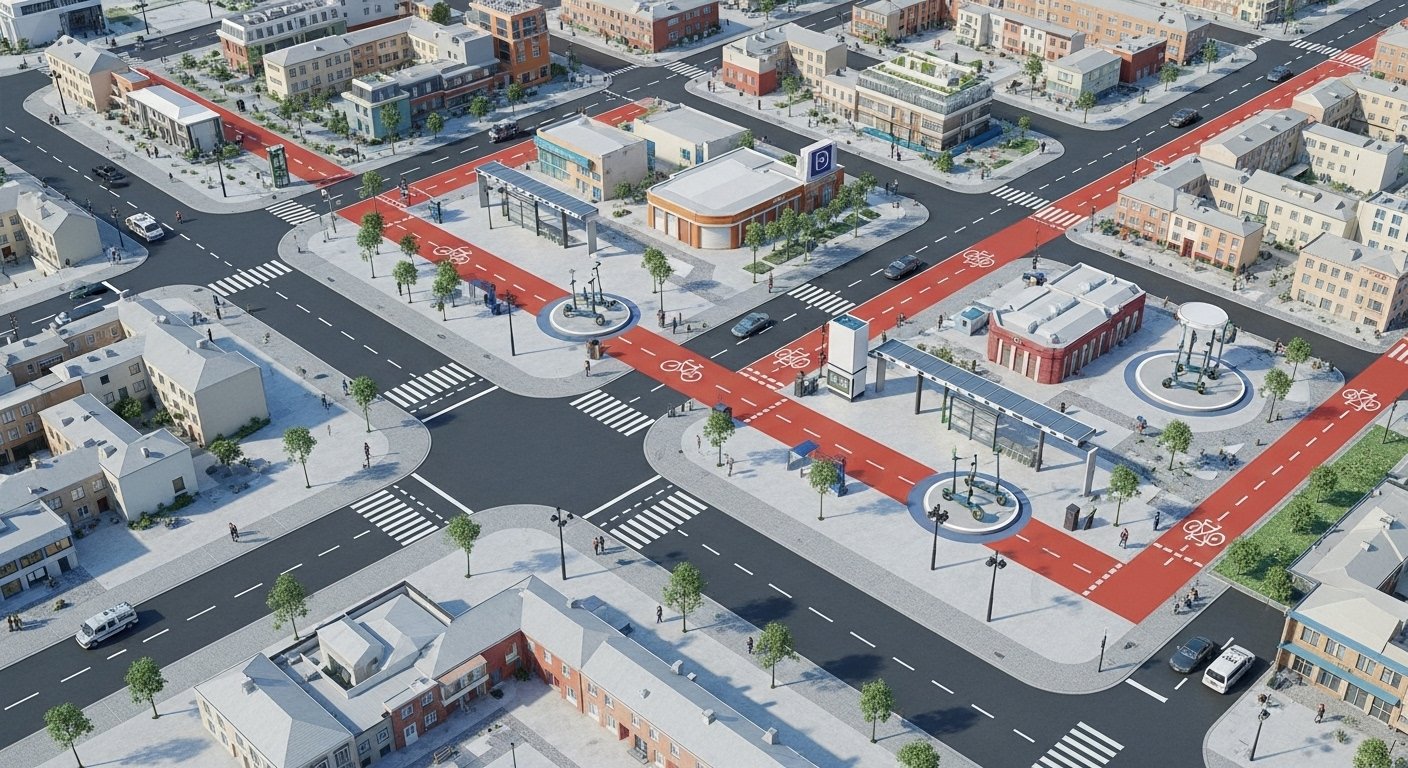
If there’s one thing cities hate, it’s guessing. They want practical, clear steps — not a 200-page plan collecting dust on a shelf. Micro-mobility can reshape the urban carbon footprint in 2026, but only if cities and operators work as partners rather than run parallel experiments. A simple roadmap can make all the difference.
A 5-step city checklist
You know those moments when a city tries something new and it just clicks? It’s never luck. It’s usually a smart sequence of decisions. A helpful starting point looks something like this:
- Start with safe, visible lanes. Even a short protected stretch boosts rider confidence.
- Add clear parking and charging hubs. Reduce clutter, reduce complaints.
- Integrate micro-mobility with transit apps. One app, one payment — simple wins.
- Offer incentives or pilot discounts. Sometimes people need a push to try something new.
- Collect data early, adjust quickly. If a route is empty, fix the route — not the riders.
When cities follow a rhythm like this, adoption grows naturally. And isn’t that the real goal — making greener choices feel effortless?
Key carbon metrics
Tracking carbon savings shouldn’t require a PhD. Cities just need the right numbers, not all the numbers. A few metrics tell most of the story:
- Car trips are replaced per week (the biggest carbon lever).
- Vehicle lifespan for shared fleets (longer life = lower footprint).
- Operational emissions (charging, maintenance, rebalancing).
- Energy source mix (cleaner grids make every ride cleaner).
Think of these as the “vital signs” of a micro-mobility program. If they trend in the right direction, cities know they’re actually cutting emissions instead of just adding cool gadgets to streets.
Common pitfalls to avoid
Every city has made at least one of these mistakes: launching scooters before building safe lanes, ignoring parking management, or measuring success by fleet size instead of actual usage. The result? Frustrated riders, annoyed residents, and carbon benefits that never show up.
Operators slip up, too — overcharging fleets with gas-powered vans, replacing batteries too often, or dropping too many vehicles in low-demand areas. These small missteps quietly erase the very carbon savings micro-mobility is supposed to bring. It makes you wonder: why not fix the predictable mistakes before they happen?
Conclusion
Somewhere between the steady hum of an e-bike and the quick buzz of a passing scooter, you can feel a quiet shift happening in our cities. It’s not loud or dramatic, but it’s meaningful — a reminder that big climate wins sometimes start with small everyday choices. Micro-mobility isn’t just changing commutes; it’s reshaping the urban carbon footprint in 2026 in a way that feels personal, almost hopeful.
When people choose lighter, cleaner ways to move, the ripple effect reaches far beyond the ride itself. Streets breathe a little easier. Neighborhoods feel more connected. And maybe, without even realizing it, we start building the kind of cities we’ve always wanted to live in.
So if there’s one thought to walk away with, let it be this: every short trip is a chance to choose a better future — one ride at a time.
FAQs
Q: Are e-scooters and e-bikes actually making a difference, or is the carbon impact just hype?
A: They’re making a real dent, especially in cities where short car trips create a huge chunk of emissions. When people swap a two-mile drive for an electric ride, the carbon savings add up faster than most folks expect.
A: They’re making a real dent, especially in cities where short car trips create a huge chunk of emissions. When people swap a two-mile drive for an electric ride, the carbon savings add up faster than most folks expect.
Q: Do micro-mobility options replace car trips, or do people just use them for fun?
A: It’s a mix, but data from several U.S. cities shows that a large share of scooter and e-bike trips are replacing quick car rides. Fun might be the reason someone tries them, but convenience is what keeps them coming back.
A: It’s a mix, but data from several U.S. cities shows that a large share of scooter and e-bike trips are replacing quick car rides. Fun might be the reason someone tries them, but convenience is what keeps them coming back.
Q: Are shared scooters worse for the environment because of charging and maintenance vans?
A: That used to be a bigger issue, but operators have gotten smarter. Many now use battery-swapping systems and electric service vehicles, which significantly reduce those extra emissions.
A: That used to be a bigger issue, but operators have gotten smarter. Many now use battery-swapping systems and electric service vehicles, which significantly reduce those extra emissions.
Q: How safe is micro-mobility for beginners who don’t bike often?
A: Safety depends a lot on the environment. Protected lanes, slower traffic streets, and good lighting make an enormous difference. Most people find that once they try an e-bike or scooter on a safe route, the learning curve is surprisingly gentle.
A: Safety depends a lot on the environment. Protected lanes, slower traffic streets, and good lighting make an enormous difference. Most people find that once they try an e-bike or scooter on a safe route, the learning curve is surprisingly gentle.
Q: Can micro-mobility really help people who don’t live in downtown areas?
A: Absolutely. E-bikes especially have expanded access for people in spread-out neighborhoods where walking just isn’t practical. They help bridge distances that are too long on foot but too short to justify a car trip.
A: Absolutely. E-bikes especially have expanded access for people in spread-out neighborhoods where walking just isn’t practical. They help bridge distances that are too long on foot but too short to justify a car trip.
Q: What’s the biggest barrier stopping more Americans from using micro-mobility?
A: Honestly, it’s comfort and confidence. If a city lacks safe lanes or clear parking rules, people hesitate. When those pieces are in place, adoption tends to rise naturally.
A: Honestly, it’s comfort and confidence. If a city lacks safe lanes or clear parking rules, people hesitate. When those pieces are in place, adoption tends to rise naturally.
Q: Do cities actually save money by supporting micro-mobility programs?
A: Yes. Fewer short car trips mean less wear on roads, less money spent on parking projects, and fewer congestion-related costs. Over time, those savings become pretty hard for cities to ignore.
A: Yes. Fewer short car trips mean less wear on roads, less money spent on parking projects, and fewer congestion-related costs. Over time, those savings become pretty hard for cities to ignore.