
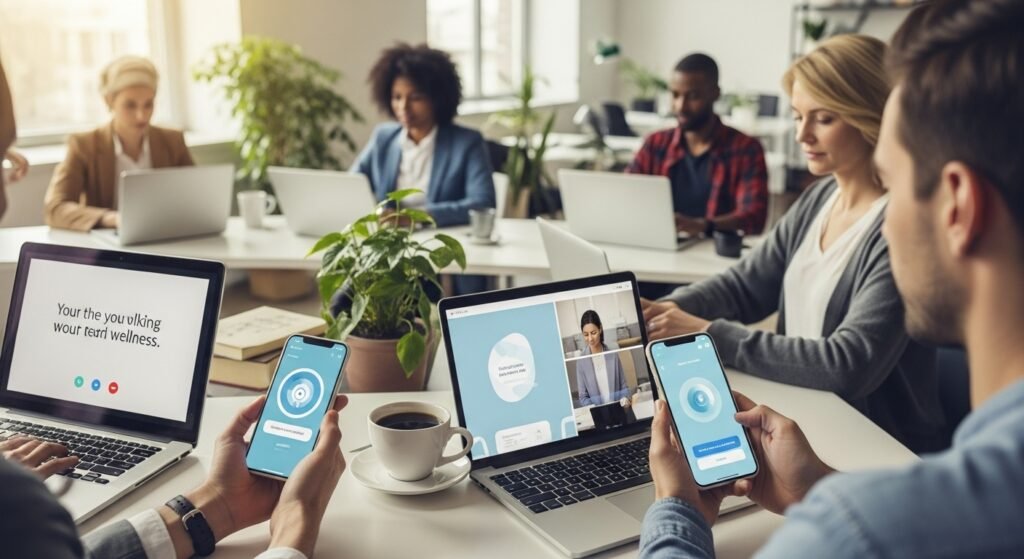
Ever catch yourself checking yet another app to “feel better” after a long workday? You’re not alone. In today’s hustle culture, even our mental health has gone digital. Companies across the U.S. are turning to workplace mental health apps, hoping they’ll ease stress, boost morale, and maybe even save on healthcare costs. It sounds smart, right? But here’s the thing—while these apps can genuinely help people manage anxiety and burnout, they can also miss the mark in surprising ways. Between privacy worries, app fatigue, and the risk of treating deep issues with quick fixes, there’s a lot to unpack. So before downloading another mindfulness app or rolling one out to your team, let’s take an honest look at the real benefits—and the not-so-pretty pitfalls—of bringing mental health tech into the workplace.
Why Companies Are Turning to Mental Health Apps

Ever notice how a simple “check-in” app shows up in more benefit packages these days? It’s not just a trend—it’s a shift in how companies think about wellbeing.
The business case
Let’s face it, the math matters. When a team member is burnt out, productivity dips. When absenteeism rises, costs pile up. Employers looking at mental health apps in the workplace are thinking: “Could this be the tool that moves the needle?” For example, apps that help track moods or prompt mindfulness breaks can reduce lost workdays and boost return on investment. By investing in digital support tools, companies aim to show employees they’re taken seriously—and that can pay off.
Have you ever wondered what happens when mental well-being is treated like part of the workflow?
Have you ever wondered what happens when mental well-being is treated like part of the workflow?
Post-COVID wellbeing trends
If the past few years taught us anything, it’s that remote work, hybrid models, blurred boundaries—it’s all real. Employees aren’t “just at the office” anymore, and mental health needs have shifted. That’s why employers are increasingly turning to mental health apps in the workplace: they meet people where they are (on phones, at home, in between calls). These digital tools give a sense of support when the old “talk to HR” option feels too formal or distant.
How many of us found ourselves using apps to calm down after a workday in pajamas?
How many of us found ourselves using apps to calm down after a workday in pajamas?
Defining workplace mental health
Workplace mental health isn’t just “don’t be stressed.” It means feeling supported when deadlines tighten, being seen when you’re struggling, having access to tools—not just a pamphlet in onboarding. When employees feel psychologically safe, engaged, and able to bring their full selves to work, the whole culture shifts. And yes—mental health apps in the workplace can play a role. But they’re part of a larger ecosystem: leadership, policy, manager training, and human connection.
Can an app alone change a culture? Probably not—but it can absolutely be one piece of the puzzle.
Can an app alone change a culture? Probably not—but it can absolutely be one piece of the puzzle.
What Mental Health Apps Offer Employees and Employers
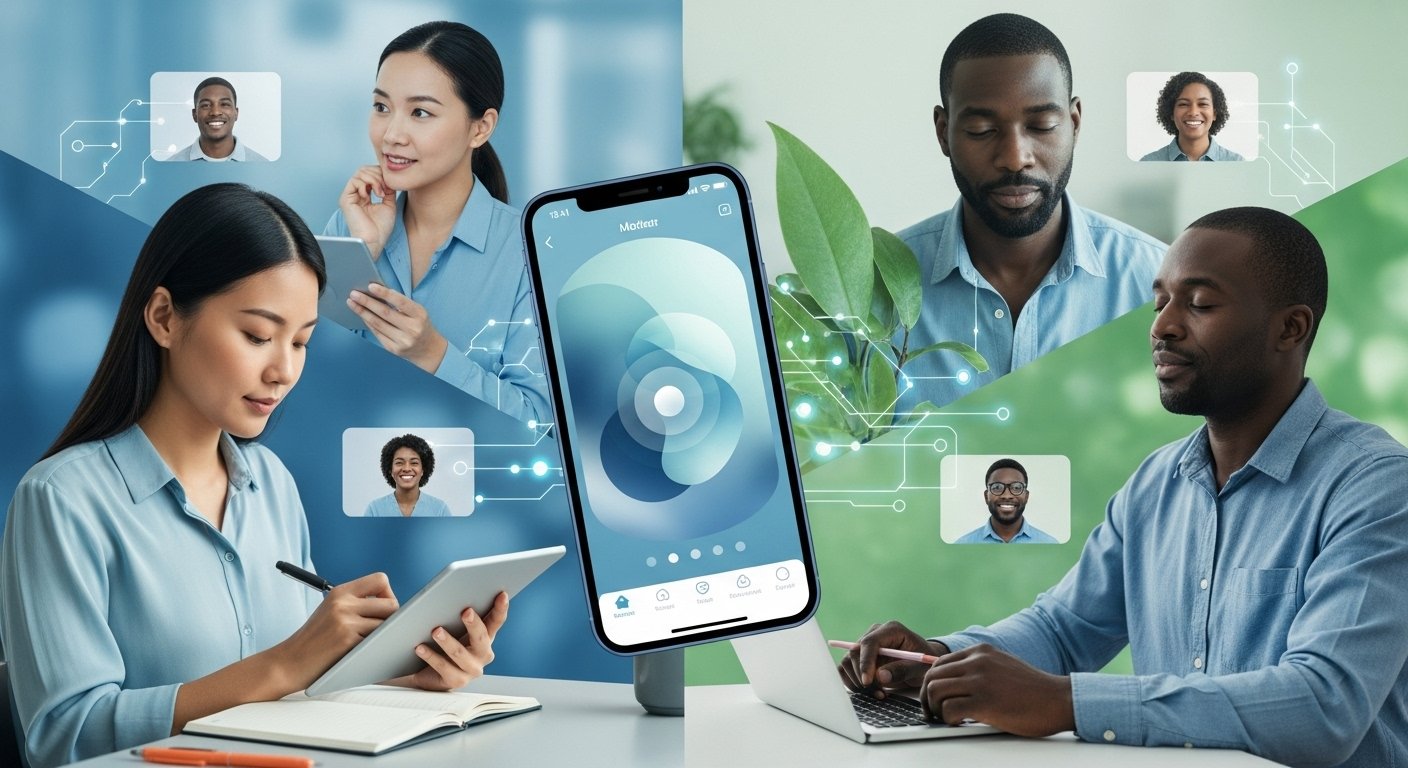
We all know the feeling — juggling deadlines, notifications, and mental overload. That’s exactly where mental health apps step in. For many U.S. workers, they’re becoming a quiet lifeline between chaos and calm. But beyond the buzzwords, what do they really offer?
Accessibility and convenience
Let’s be honest — therapy isn’t always easy to access. Between long waitlists, high copays, and packed schedules, finding help can feel impossible. That’s why mental health apps in the workplace have gained so much traction. With just a few taps, employees can journal their thoughts, meditate, or connect to a licensed coach — sometimes in minutes.
Picture this: someone stuck in back-to-back meetings opens a quick breathing exercise app before a big client call. It’s small, but it can change the entire tone of their day. Convenience doesn’t cure burnout, but it sure makes support easier to reach.
Ever wonder how different workdays would feel if help were literally in your pocket?
Ever wonder how different workdays would feel if help were literally in your pocket?
Self-care tools and tracking
The best apps don’t just tell people to “relax” — they help them understand themselves. Mood trackers, gratitude prompts, and even sleep logs create patterns employees (and employers) can learn from. Over time, this data reveals what triggers stress and what helps calm it down.
It’s like having a mirror for your mind — you start to notice what’s off before it becomes overwhelming. For organizations, these anonymous insights can also guide broader wellness policies. Just imagine HR leaders knowing when stress spikes across teams, so they can act before burnout hits.
Engagement through gamification
Gamification sounds fancy, but it’s really about motivation. Points, streaks, friendly reminders — all those little nudges help users keep going. It’s not about competing with others, but building micro-wins that feel good.
For instance, an app might celebrate your 10-day meditation streak or reward a team challenge for completing daily gratitude entries. These small victories spark consistency, and consistency leads to real mental health improvements.
Who knew a simple “streak badge” could help someone stick with self-care longer than New Year’s resolutions?
Who knew a simple “streak badge” could help someone stick with self-care longer than New Year’s resolutions?
Integration with wellness programs
The smartest companies don’t treat apps as a standalone fix. They weave them into existing wellness programs — pairing digital tools with human connection. Imagine combining an app’s mindfulness library with weekly check-ins from a manager who genuinely cares.
This blend of tech and empathy is where the magic happens. Employees feel supported from both sides — the app provides daily coping tools, while workplace culture nurtures real conversations. When HR teams link app insights with wellness initiatives, mental health stops being an afterthought and becomes part of everyday work life.
Evidence for Effectiveness in the Workplace

When companies invest in mental health apps, they hope for more than just good intentions—they want results. But how much do these digital tools really move the needle? Let’s unpack what the research (and reality) say about their impact.
Key research insights
Over the past few years, several studies have explored how mental health apps perform in real workplaces. Results are cautiously optimistic. Some research shows that employees who use mindfulness or CBT-based apps report lower stress and better focus within just a few weeks. A 2023 U.S. study even found that consistent app use cut self-reported burnout levels by nearly 25%.
But here’s the catch: success often depends on consistency. Employees who only log in once or twice rarely see real change. The apps work best when combined with a supportive culture—managers who talk openly about mental health and HR teams that normalize taking “wellbeing breaks.”
Wouldn’t it be great if every company treated self-care as part of the job, not an afterthought?
Wouldn’t it be great if every company treated self-care as part of the job, not an afterthought?
Strengths and limitations
Mental health apps in the workplace do offer real advantages: they’re scalable, cost-effective, and can reach employees who might never see a therapist otherwise. For remote teams, that kind of access is priceless. But we can’t ignore their weak spots.
Many apps rely on self-reported mood data, which can be unreliable. Others use generic content that doesn’t account for individual or cultural differences. And then there’s the engagement problem—download numbers look great, but active use often drops after a few weeks. It’s the digital equivalent of joining a gym in January.
Ultimately, these tools support mental health; they don’t replace it. Without real human connection and organizational support, the impact fades.
Measuring ROI and outcomes
Here’s the part most leaders struggle with—how do you prove it’s working? The key is to track both human and business metrics.
- On the human side: survey stress levels, engagement, and employee satisfaction before and after introducing the app.
- On the business side: look at absenteeism, healthcare claims, turnover, and productivity trends.
It’s not an overnight story. Real ROI takes months to see. But when companies pair app analytics with honest conversations and cultural change, they can spot patterns—fewer sick days, better morale, even stronger retention. Numbers matter, but the smiles at work matter more.
The Hidden Pitfalls and Risks
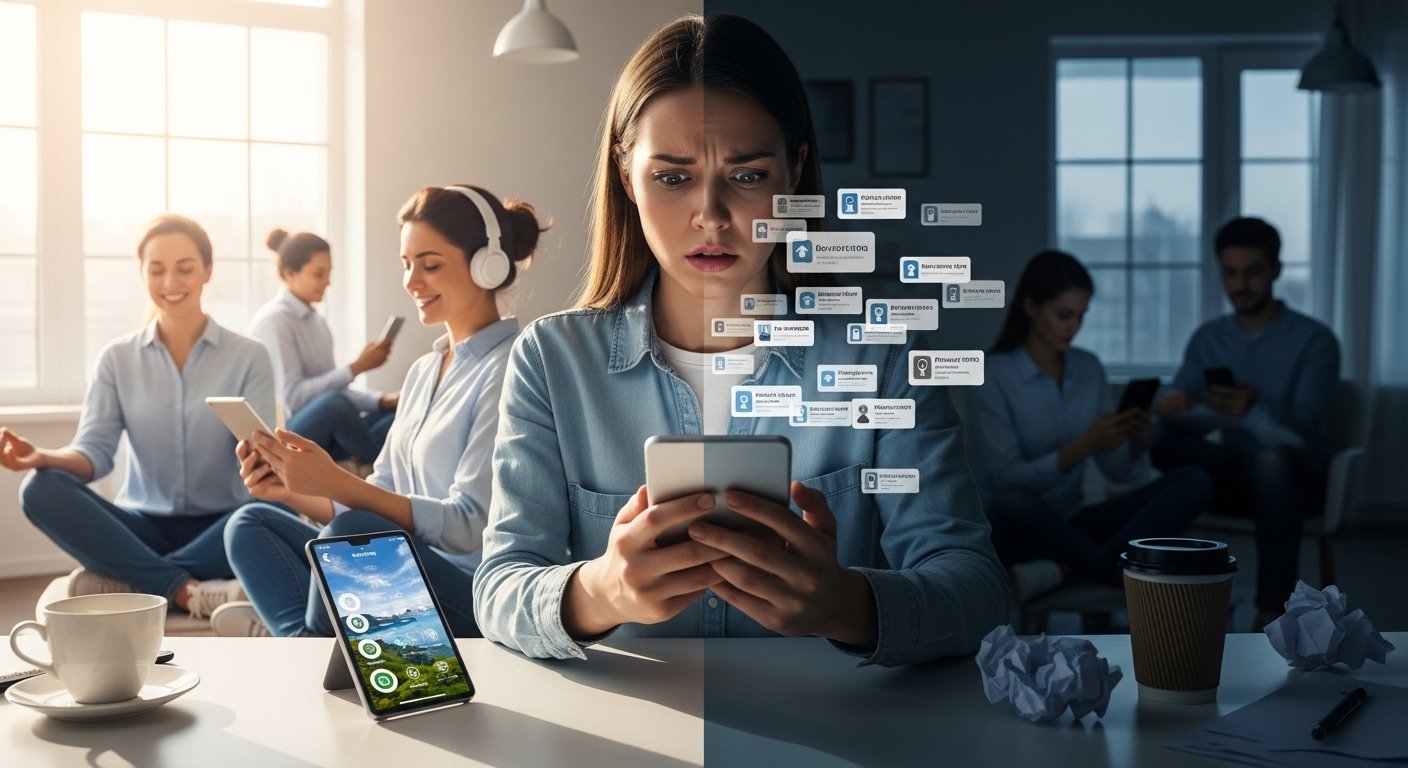
For every story about a mental health app that helped someone sleep better or worry less, there’s another about frustration, mistrust, or disappointment. Let’s be real — not every digital fix lives up to its promise. Behind the glossy marketing and motivational quotes, there are a few red flags worth watching.
Unproven claims and hype
You’ve probably seen them — apps that promise to “eliminate stress in 10 minutes” or “transform your mood instantly.” Sounds great, but most of these claims don’t stand on much scientific ground. Some apps rely more on catchy marketing than on credible research.
When companies roll them out at work, the risk grows. Employees can sense when something feels more like PR than care. Overpromising creates false hope, and when that hope fades, cynicism sets in. The truth? A meditation timer can help, but it’s not therapy.
Ever downloaded an app that promised peace and ended up with more notifications?
Ever downloaded an app that promised peace and ended up with more notifications?
Data privacy concerns
Here’s where things get personal — literally. Many mental health apps collect sensitive data, including mood logs, sleep patterns, and even journal entries. Employees often wonder, “Who sees this?” And that’s a fair question.
In some workplaces, people worry their data might be shared with HR or insurance providers, even when it’s supposedly anonymous. Trust breaks fast when privacy feels uncertain. If workers believe their mental health information could affect promotions or performance reviews, they’ll stay silent—or uninstall the app altogether.
The golden rule? Mental health support should never feel like surveillance.
Employee trust and adoption
Even the most well-designed app can flop if people don’t trust it. Some employees view corporate wellness tools with suspicion — “Is this really for me, or just to make the company look good?” Others fear judgment for using mental health resources at all.
Adoption only works when the rollout feels personal, not forced. Leaders who share their own experiences, encourage open dialogue, and keep usage voluntary build genuine engagement. Without that human layer, the best tech in the world will sit untouched on people’s phones.
Would you open up about your stress if you weren’t sure who’s listening?
Would you open up about your stress if you weren’t sure who’s listening?
Over-reliance on apps
It’s tempting for organizations to see these apps as a quick fix — cheaper than therapy, easier than changing culture. But no app can replace a compassionate manager, a fair workload, or healthy boundaries.
When companies rely too heavily on digital wellness tools, they risk ignoring deeper issues: toxic leadership, overwork, and a lack of inclusion. A mindfulness reminder can’t undo a 70-hour week. Real wellbeing needs structure, not just software.
Balance matters — use apps as support, not as a substitute.
Legal and ethical risks
In the U.S., privacy laws like HIPAA and ADA draw clear lines around how employee health data is handled. Crossing them, even unintentionally, can lead to legal trouble. Ethical concerns also loom large — are companies pushing apps to genuinely help, or just to check a box?
Transparency is everything. Employers must clearly explain what data is collected, how it’s stored, and who controls it. Otherwise, a good-intentioned wellness effort can turn into a PR nightmare overnight.
Because at the end of the day, protecting mental health should never come at the cost of trust or safety.
Adoption and Implementation Roadmap

Rolling out mental health apps in the workplace isn’t just a tech project — it’s a culture project. Done right, it can bring real relief and connection. Done wrong, it turns into another forgotten HR initiative. Here’s how to make it stick.
Planning and goal-setting
Before buying anything, pause and ask the simplest question: Why are we doing this? Is the goal to reduce burnout? Improve engagement? Support remote workers? Clarity here sets the tone for everything else.
Start small — maybe a pilot with one department or a group of volunteers. Gather feedback before going company-wide. The most successful programs grow from listening first, not launching fast. Employees can spot when a company’s being genuine versus just checking a wellness box.
Wouldn’t you trust a program more if it felt built around your needs, not someone’s KPI?
Wouldn’t you trust a program more if it felt built around your needs, not someone’s KPI?
Choosing the right app
There’s no shortage of shiny options out there — mindfulness apps, AI coaches, CBT tools, sleep trackers. The trick is finding what fits your people, not just your budget. Look for apps that are evidence-based, easy to use, and transparent about their privacy practices.
Ask: Can employees personalize the experience? Does it integrate with existing wellness benefits or EAPs? And perhaps most important — does it actually feel human? A clunky interface or impersonal chatbot can turn off users faster than you think.
Tip: involve a few employees in testing before you sign the contract. They’ll tell you what HR won’t catch.
Tip: involve a few employees in testing before you sign the contract. They’ll tell you what HR won’t catch.
Launch and engagement
The first impression matters. Instead of a corporate memo, tell a story. Have leaders share their own experiences with stress or mental health apps. Encourage managers to start meetings with a simple reminder to use the app or take a mental pause.
Keep participation optional but inviting. Consider fun challenges — like a “mindful moments” week or small rewards for consistency. Engagement grows when people feel supported, not watched.
Would you download an app because HR told you to, or because your teammate said it actually helped them sleep better?
Would you download an app because HR told you to, or because your teammate said it actually helped them sleep better?
Monitoring results
Tracking outcomes doesn’t have to feel clinical. You can blend numbers with narrative. Watch engagement data — log-ins, completion rates — but also listen to feedback. Run quick surveys or check-ins to learn what’s working and what’s falling flat.
If stress levels or absenteeism drop, celebrate it. If usage dips, find out why. Sometimes a small tweak — shorter sessions, new content — makes all the difference. The goal isn’t perfect metrics; it’s meaningful progress.
Continuous improvement
Mental health programs aren’t “set it and forget it.” Needs change, teams evolve, and the world keeps throwing curveballs. Review your app partnership at least twice a year. Update features, refresh training, and keep communication open.
Invite employees to co-create ideas — maybe a “mental health ambassador” team or a peer-support circle. That kind of shared ownership keeps momentum alive.
Because when people feel heard, they don’t just use the app — they believe in it.
Because when people feel heard, they don’t just use the app — they believe in it.
Tailoring for Diverse Workforces

One-size-fits-all doesn’t work for sneakers, and it definitely doesn’t work for mental health. Every workplace has a mix of people — remote, on-site, hourly, full-time — each facing unique challenges. If companies truly want mental health apps in the workplace to make a difference, they need to think beyond “universal access” and focus on real inclusion.
Remote and on-site teams
Working from home can be both a blessing and a burden. Remote employees may skip the commute but trade it for isolation, longer screen time, and blurred boundaries. On the other hand, on-site workers might face constant pressure, noise, or a lack of privacy to use an app during shifts.
A smart approach tailors resources to both. Remote teams benefit from mindfulness reminders or end-of-day check-ins that help them disconnect. On-site employees might prefer quick audio tools or short exercises they can use on breaks — no Wi-Fi struggles, no awkward looks.
It’s not about fancy tech; it’s about meeting people where they actually are. After all, what’s the point of a wellness tool if no one feels comfortable using it?
Blue-collar and gig workers
These are often the most overlooked groups when it comes to digital wellbeing. Many gig and blue-collar workers don’t sit at a desk or have access to company-issued devices. Their schedules are unpredictable, and taking “mental health time” might feel unrealistic.
For them, the right kind of app has to be simple, low-bandwidth, and available in multiple languages. Even a quick guided breathing session before a long shift can make a world of difference. Companies can also support through incentives — for instance, rewarding consistent app use with extra time off or recognition.
Wouldn’t it be refreshing if wellness tools were designed for the warehouse floor, not just the corner office?
Inclusion and accessibility
Mental health is universal, but access isn’t. Employees with disabilities, neurodivergent individuals, and those from different cultural or linguistic backgrounds often find wellness tools that don’t speak to their reality.
To fix that, employers should choose apps that include text-to-speech, adjustable visuals, and content in multiple languages. Representation also matters — the app’s voices and visuals should reflect diverse identities. When people see themselves in the tools they use, engagement naturally grows.
Inclusion isn’t just a checkbox. It’s empathy in design — and that’s what makes mental health support feel real, not performative.
Emerging Trends and Future Outlook
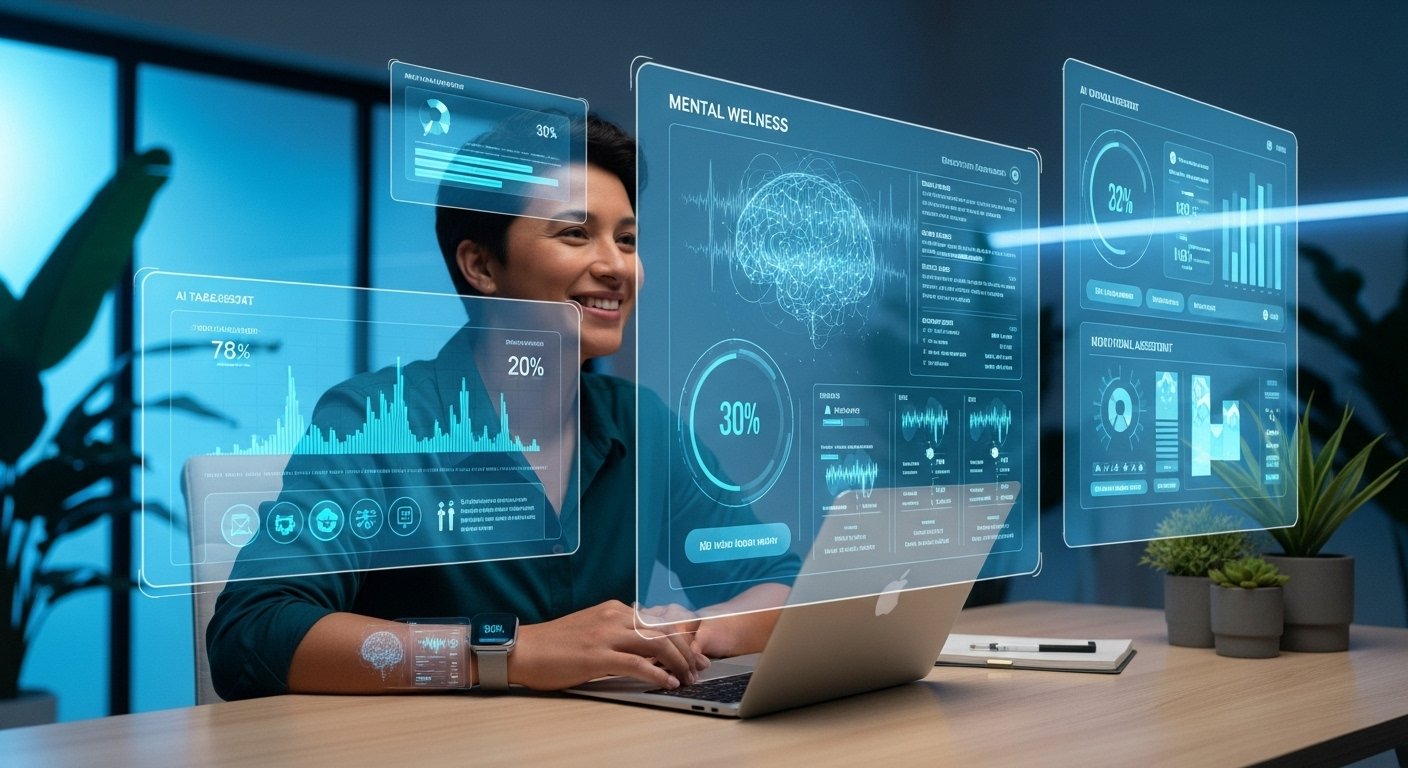
Technology is evolving fast — almost too fast sometimes. What started as simple meditation apps has now grown into entire ecosystems powered by AI, wearables, and behavioral science. But the real question is: how do these new tools change the way we care for people at work?
AI-driven tools
AI in mental health sounds futuristic, but it’s already here. Many apps now use artificial intelligence to personalize check-ins, detect mood changes, and even suggest micro-breaks based on typing patterns or message tone.
Picture this: you’re typing an email, and an app gently nudges you to pause because your tone seems tense. It’s strange — but also kind of thoughtful. The goal isn’t to replace human empathy but to enhance it. Still, AI comes with a fine line — when does “helpful insight” become “too much data”?
That’s why transparency matters. If employees understand how AI tools work and what data they use, they’re more likely to trust them. After all, technology should feel like a partner, not a monitor.
Wearables and biofeedback
If you’ve ever worn a smartwatch that buzzes when your heart rate spikes, you’ve already met the future of workplace wellbeing. Wearables are moving beyond fitness into emotional health — tracking stress, sleep, and even subtle body cues that signal burnout before it hits.
For example, an employee’s device might detect tension patterns and prompt a short breathing session between meetings. It’s small, but it can prevent bigger breakdowns down the road. The challenge? Balancing helpful insight with privacy boundaries. No one wants their stress levels displayed on a company dashboard.
Wouldn’t it be better if these tools focused on empowering individuals rather than measuring them?
Regulation and compliance
As digital wellness grows, so do the rules around it. In the U.S., laws like HIPAA and the ADA are beginning to shape how mental health data is stored and shared. Global companies also face GDPR constraints for employees abroad.
The future will demand more than good intentions — it’ll require airtight compliance. Employers using mental health apps in the workplace must ensure vendors meet strict privacy standards, provide clear consent forms, and separate wellbeing data from performance metrics.
Because when it comes to mental health, “safe” doesn’t just mean secure servers — it means emotional safety, too.
The mental-health ecosystem
The next evolution isn’t just about more apps — it’s about integration. The most successful workplaces won’t rely on a single platform; they’ll connect apps, therapy, EAPs, and real human support into a cohesive system.
Think of it like an ecosystem where technology plays a supportive role — daily check-ins from apps, guidance from wellness coaches, and genuine connection from managers. The future of workplace wellbeing won’t be digital or human; it’ll be both.
Because the truth is, no app can fix a culture. But the right mix of tools and empathy can create one where people actually thrive.
Case Studies (U.S. Employer Examples)

Behind every workplace wellbeing strategy, there’s a story — some inspiring, some humbling. These real examples show what happens when companies take mental health support seriously… and when they realize it’s more than just an app download.
Success stories
Let’s start with a win. A major U.S. tech company introduced a mental health app that offered guided meditation, live therapy chats, and burnout check-ins. At first, engagement was slow. People didn’t quite trust it yet. But leaders started sharing their own experiences with stress and anxiety, even mentioning how the app helped them reset before meetings.
Within six months, usage skyrocketed. Employees began forming mini “mindfulness squads,” and sick days dropped noticeably. One manager even said, “It’s not just an app — it’s a conversation starter.” That’s the magic of doing it right — leading by example, not by mandate.
Another example comes from a manufacturing company in Ohio that introduced a simpler, low-bandwidth app tailored for shift workers. It focused on short breathing exercises and fatigue tracking. Within three months, the company saw a 15% drop in reported exhaustion levels. It wasn’t flashy — it was practical.
Because sometimes the best tech isn’t the most advanced one — it’s the one that fits real life.
Lessons learned
Not every story ends with confetti. One financial firm learned this the hard way. They launched a pricey wellness platform but forgot to include employees in the planning process. The result? Poor adoption, confusion, and skepticism. Many workers felt it was just a way for management to “check a box.”
Another startup integrated a mental health app, but didn’t clarify privacy terms. Employees worried their stress data might influence promotions — so they stopped using it altogether. It took transparency meetings and open Q&A sessions to rebuild trust.
These stories remind us that good intentions can fall flat without good communication. It’s not about how sleek the app looks — it’s about how safe and supported people feel using it.
Ever noticed how people open up only when they trust the space they’re in? The same rule applies digitally.
Key takeaways
The most successful mental health apps in the workplace share one common thread: they’re backed by culture, not just code. They work best when leaders are involved, communication is honest, and privacy is treated as sacred.
Employers who see apps as part of a broader wellness strategy — not the whole strategy — are the ones seeing real results.
Because in the end, technology can spark the conversation, but people keep it going.
Conclusion
Maybe the truth about mental health apps in the workplace is that they’re not just tools — they’re mirrors. They reflect how much a company genuinely values its people. When used thoughtfully, they can create space for calm in the chaos, spark honest conversations, and remind us that taking care of our minds is just as important as meeting deadlines. But they work best when paired with empathy — real leaders listening, real teams supporting one another.
Technology can open the door to wellbeing, but it’s the culture behind it that decides whether people feel safe enough to walk through. So maybe the question isn’t which app to choose, but how ready we are to build workplaces where mental health isn’t an add-on — it’s a shared priority.
FAQs
Q: Do mental health apps in the workplace actually work?
A: They can, but it depends on how they’re used. When paired with supportive leadership and an open culture, these apps help employees manage stress and stay mindful. On their own, though, they’re just a tool — not a full solution.
A: They can, but it depends on how they’re used. When paired with supportive leadership and an open culture, these apps help employees manage stress and stay mindful. On their own, though, they’re just a tool — not a full solution.
Q: Are mental health apps safe to use at work?
A: Most reputable apps take privacy seriously, but it’s smart to read the fine print. Look for apps that clearly state how your data is stored and shared. If your employer provides one, ask whether your personal information stays confidential.
A: Most reputable apps take privacy seriously, but it’s smart to read the fine print. Look for apps that clearly state how your data is stored and shared. If your employer provides one, ask whether your personal information stays confidential.
Q: How do companies benefit from offering mental health apps?
A: Employers often see better engagement, lower burnout, and fewer sick days. But the real benefit comes when employees feel seen and supported — when wellbeing isn’t treated like a checkbox but part of everyday work life.
A: Employers often see better engagement, lower burnout, and fewer sick days. But the real benefit comes when employees feel seen and supported — when wellbeing isn’t treated like a checkbox but part of everyday work life.
Q: What are the downsides of using workplace mental health apps?
A: Some apps make big promises without strong science behind them. Others raise privacy or trust issues. And if companies rely on them too much, they might overlook deeper causes of stress, such as workload or a toxic culture.
A: Some apps make big promises without strong science behind them. Others raise privacy or trust issues. And if companies rely on them too much, they might overlook deeper causes of stress, such as workload or a toxic culture.
Q: Can mental health apps replace therapy or in-person support?
A: Not really. They’re great for daily check-ins or building healthy habits, but they can’t replace professional help. Think of them as a supplement — like a workout app for your mind — not a substitute for therapy.
A: Not really. They’re great for daily check-ins or building healthy habits, but they can’t replace professional help. Think of them as a supplement — like a workout app for your mind — not a substitute for therapy.
Q: How can employers encourage people to actually use these apps?
A: The key is trust and relatability. When leaders talk openly about mental health and share how they use the app themselves, it breaks down stigma. A little transparency goes a long way in turning a tool into a genuine support system.
A: The key is trust and relatability. When leaders talk openly about mental health and share how they use the app themselves, it breaks down stigma. A little transparency goes a long way in turning a tool into a genuine support system.
Q: What’s the future of mental health apps in the workplace?
A: Expect smarter, more personalized tools — AI-driven check-ins, wearables that track stress, and better integration with existing wellness programs. But even with all the tech, human empathy will always be the real game-changer.
A: Expect smarter, more personalized tools — AI-driven check-ins, wearables that track stress, and better integration with existing wellness programs. But even with all the tech, human empathy will always be the real game-changer.